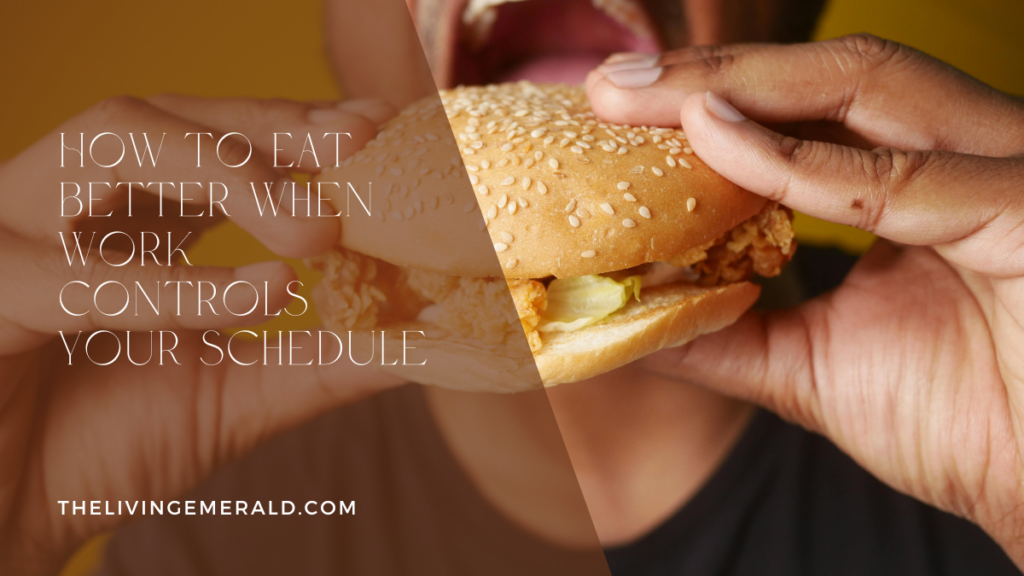
Eat better when work controls your schedule is easier said than done when the average day starts with client emails before breakfast and ends with a print job that has to go out before anyone can rest. Running a small business — especially alone — has a way of pushing food to the bottom of the priority list, right below everything that feels urgent.
Why It’s Hard to Eat Better When Work Controls Your Schedule
When you’re the only one keeping the business moving, food stops being a planned part of the day and becomes whatever is fastest between tasks. Skipped breakfasts, a quick roadside snack instead of lunch, and a heavier-than-necessary dinner because the body is finally allowed to eat — this pattern is common among people running businesses alone, and it rarely gets addressed until energy or health forces the issue.
There is also a mental shift that happens without anyone noticing. Food starts to feel like an interruption to the workday rather than part of it — something that competes with client calls and deadlines instead of something that fuels the ability to do either well. Once that mental shift settles in, skipping meals stops feeling like a problem and starts feeling like discipline.
The goal isn’t a perfect diet. It’s a realistic one that survives a genuinely unpredictable schedule.
Five Habits That Actually Fit a Busy Schedule
These five habits won’t fix everything, but they make it realistic to eat better when work controls your schedule most days.
- Prepare two or three meals in advance, not seven. A full week of meal prep rarely survives real life. Two or three ready meals reduce the number of times “no time to eat” turns into “nothing to eat.”
- Keep one real snack within reach at all times. Boiled eggs, groundnuts, or fruit in the bag or office drawer prevent the vending-machine decision made out of desperation.
- Anchor one meal to a fixed time, even if the others move. A schedule that changes daily still holds together better with one predictable eating point — often lunch — that doesn’t get negotiated away.
- Hydrate on purpose. A lot of “afternoon exhaustion” during long client hours is dehydration wearing a different name.
- Treat food like a client deadline, not an afterthought. Put it on the schedule the same way a delivery date goes on the schedule. What gets scheduled is far more likely to actually happen.
The Harvard School of Public Health’s healthy eating guidance makes the same practical point in a different way: consistency in ordinary meals matters more than occasional perfect ones. None of this requires quitting caffeine or becoming a meal-prep influencer. It requires treating your own body as a resource the business depends on — because it is.
What a Realistic Day Can Actually Look Like
A workable day doesn’t need to be perfectly planned from morning to night. It might look like this: a boiled egg and fruit eaten in the first ten minutes of checking emails, a proper lunch eaten at the same rough time each day even if the location changes, a bottle of water kept visibly on the desk rather than tucked away, and a light dinner that doesn’t try to make up for everything skipped earlier. None of these steps require extra time most days — they require deciding, once, that food belongs on the schedule instead of waiting for a gap that may never appear.
Why This Matters Beyond Health
Eating poorly under work pressure doesn’t just affect the body — it affects the same judgment and patience the business depends on. A founder running on skipped meals makes slower decisions, communicates more sharply than intended, and burns out faster than the workload alone would cause. Clients notice the difference between a founder who is sharp and present and one who is running on fumes, even if they can’t name exactly why.
Eating better when work controls your schedule isn’t a side project. It’s part of what keeps the business itself running.
In short, learning to eat better when work controls your schedule is not about willpower alone — it is about designing a few small defaults that hold up even on the busiest days.
Related Reading
See also Health After 40 and The Cost of Ignoring Rest.