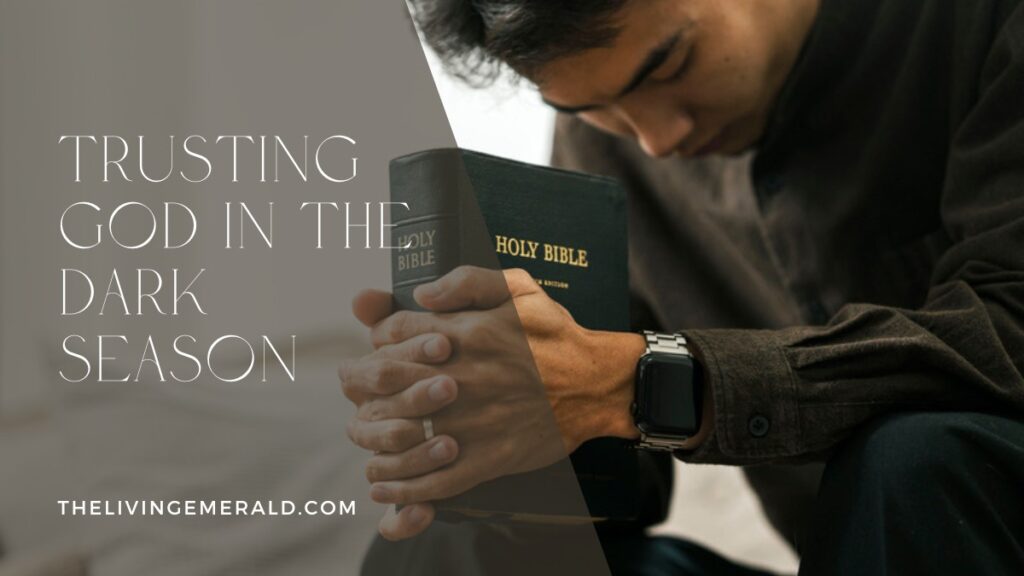

There are seasons when prayer feels like talking to a ceiling, when reading your Bible feels like homework instead of life, and when worship songs that used to move you now just… play. If you’re in one of those seasons, you’re not alone, and you haven’t lost your faith. This is spiritual dryness, and almost every believer who has walked with God for more than a few years has passed through it.
Spiritual dryness is the quiet, often confusing experience of feeling distant from God even when nothing has visibly changed in your life. You still believe. You still show up. But the warmth, the sense of closeness, the “spark” — it’s gone quiet. Left unaddressed, it can tempt you to either fake a feeling you don’t have, or quietly drift away from the practices that once fed your soul.
You Are Not the First Person to Feel This Way
Scripture is full of people who named this exact experience instead of hiding it. The psalmist cried, “My soul thirsts for God, for the living God. When can I go and meet with God?” (Psalm 42:2). That’s not the voice of someone who has lost their faith — it’s the voice of someone who refuses to pretend. Naming spiritual dryness honestly, instead of performing spirituality you don’t feel, is actually the first faithful step out of it.
1. Stop Measuring Your Faith by Your Feelings
Feelings are real, but they are not the most reliable measure of whether God is near or whether your faith is “working.” Faith is choosing to trust what is true even when it doesn’t feel true in the moment. During spiritual dryness, your job isn’t to manufacture emotion — it’s to keep showing up in obedience and let feeling catch up later, or not at all. Both are okay.
2. Get Curious About What Changed
Spiritual dryness rarely comes from nowhere. Ask yourself honestly: has prayer become a monologue instead of a conversation? Has busyness crowded out quiet moments? Is there unprocessed grief, burnout, or unconfessed resentment sitting underneath the dryness? You don’t need to solve everything today, but naming the real cause — rather than just “praying harder” — often does more than another hour of forced devotion.
3. Shrink Your Practice Instead of Abandoning It
When a 30-minute quiet time feels impossible, five honest minutes beats zero. Read one verse slowly. Say one true sentence to God, even if it’s “I don’t feel You right now, but I’m still here.” Consistency in a small, sustainable practice will carry you further through a dry season than an ambitious routine you quietly stop doing out of guilt.
4. Let Other Believers Carry You for a While
Dry seasons are isolating because they feel embarrassing to admit. But community is often how God shows up when your private devotional life feels silent — through a sermon that lands at the right moment, a friend’s prayer, or simply being around people who still believe when you’re struggling to. Don’t withdraw from church or community during the dryness; that’s often exactly when you need it most.
5. Remember That Dry Seasons End
Every season in Scripture that looked like absence — the wilderness, the exile, the silence before Christ’s birth — was eventually followed by God’s presence becoming unmistakably clear again. Spiritual dryness is a season, not a verdict on your relationship with God. Keep walking. The dryness is not the end of your story with Him.
You Haven’t Lost Anything
If you’re walking through spiritual dryness right now, let this be the encouragement you needed: God is not more distant from you because you feel less. He is near the brokenhearted (Psalm 34:18), and He is patient with seasons of struggle. Keep showing up in the small, honest ways — that is what faith in a dry season actually looks like.
If you’re also walking through a season of waiting, you may find encouragement in what the Bible says about waiting on God’s timing, or if prayer itself feels hard right now, how to pray when you don’t know what to say may help you take the next small step.