
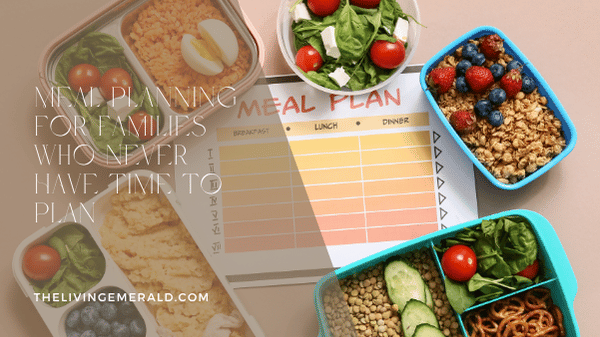
Every January and every Monday, someone decides this is the week they’ll finally get meal planning under control — and by Wednesday, the plan has collapsed into whatever’s fastest. If that sounds familiar, the problem usually isn’t willpower. It’s that most meal-planning advice is built for people with more free time and fewer interruptions than a real family actually has.
1. Plan Meals, Not a Menu
You don’t need seven different dinners. Pick 4-5 meals your family already likes and rotate them weekly, swapping in something new only occasionally. A repeating rotation removes the mental load of deciding “what’s for dinner” from scratch every single day, which is usually the real source of exhaustion, not the cooking itself.
2. Plan Around Your Hardest Days First
Most planning fails because it assumes every day has equal time and energy. Instead, identify your two or three hardest days of the week and plan the fastest meals — leftovers, freezer meals, a 15-minute stir-fry — specifically for those. Save the meals that need more time for the days you actually have it.
3. Shop From a Short, Repeatable List
If your rotation stays mostly the same, your grocery list can too. Keep a saved list on your phone of your 4-5 regular meals’ ingredients, and just add or remove a few items each week instead of rebuilding the list from zero. This alone can cut your planning and shopping time dramatically.
4. Batch One Task, Not the Whole Week
You don’t need to cook all week’s meals on Sunday to benefit from batching. Pick one task — chopping vegetables, cooking a batch of rice or beans, marinating proteins — and do that one thing ahead. One prepped task removes just enough friction from a busy weeknight to make cooking feel possible instead of overwhelming.
5. Let “Good Enough” Be the Goal
A realistic meal plan that gets used beats a perfect one that gets abandoned by Wednesday. Give yourself permission for a “whatever’s in the freezer” night once a week without guilt. The goal of meal planning isn’t a flawless system — it’s fewer stressful 6pm scrambles, and that’s achievable with far less effort than most guides suggest.
What to Do When the Plan Falls Apart Anyway
Even a realistic meal plan will get derailed sometimes — a sick child, a late meeting, an exhausting day that empties your tank completely. When that happens, resist the urge to abandon the whole system out of frustration. Simply pick back up at the next meal, without guilt or a dramatic restart. A meal plan that bends without breaking is far more sustainable than one that demands perfection to keep working.
Involve the Family in the Plan
Meal planning doesn’t have to be a solo task carried by one parent. Letting children pick one meal for the week’s rotation, or having a spouse handle the grocery list some weeks, spreads the mental load and often increases buy-in at the table too — children are more likely to eat a meal they had a hand in choosing. According to the NHS, involving children in food decisions early also supports healthier eating habits long-term.
A Simple Rotation to Start With
If building your own rotation feels overwhelming at first, start with something this simple: one rice-based meal, one pasta-based meal, one bean or legume meal, one chicken or fish meal, and one “clear the fridge” night using whatever’s left. Five meals, repeated with small variations, cover most of a week without requiring fresh decision-making every single day — and once it’s a habit, you’ll barely think about it at all.
Make Meal Planning a Five-Minute Weekly Habit
Treat meal planning as a quick five-minute task at the start of each week, not a project. The more you practice meal planning this way, the faster and more automatic it becomes — eventually, meal planning stops feeling like extra work at all and simply becomes part of your weekly rhythm.
If getting your family eating better is the bigger goal, these simple ways to add more vegetables to picky eaters’ plates and how to get more sleep when you have young kids pair well with a realistic meal rhythm.