
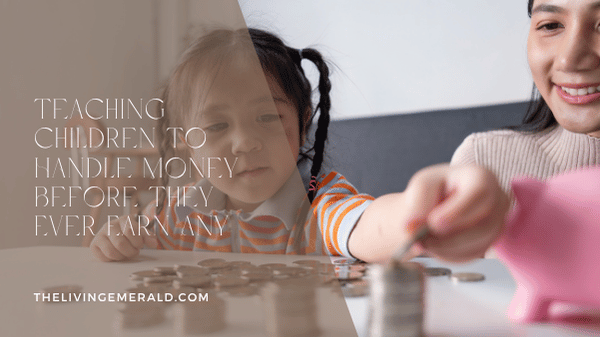
Many parents assume financial lessons should wait until a child has their own income — a first job, an allowance they manage independently. But teaching children to handle money actually works best when it starts years before they earn anything at all, through small, concrete experiences rather than abstract lectures.
1. Let Them See Real Decisions Being Made
Children absorb far more from watching you handle money honestly — choosing between two options at the store, explaining why you’re saving for something instead of buying it now — than from any single formal money lesson. Narrate your own reasoning out loud occasionally; it teaches more than it seems.
2. Give Them Small, Real Choices Early
Even a young child can manage a small amount of money for a specific choice — what to buy with a little allowance, whether to save toward something bigger. Real, small-stakes practice teaches far more than a lecture about money management ever will.
3. Teach the Difference Between Want and Need, Concretely
Abstract explanations of “wants vs needs” rarely stick. Concrete examples do: “We need groceries this week, and we want the toy — let’s see what’s left after what we need.” Repeated, concrete examples build the distinction far more effectively than one big conversation.
4. Normalize Talking About Money as Non-Shameful
In many households, money is either never discussed or discussed only during stress and conflict. Children raised this way often grow into adults uncomfortable talking about finances. Normalizing calm, regular money conversations early removes a lot of that inherited discomfort.
5. Let Them Experience Small Financial Consequences
If a child spends their small allowance impulsively and then can’t afford something they wanted later, resist rescuing them immediately. A small, low-stakes financial disappointment at age eight teaches a lesson far more gently than the same lesson learned for the first time as an adult.
Model Generosity Alongside Saving
Teaching children to handle money well includes more than saving and spending wisely — it also means modeling generosity, giving to others as part of a healthy relationship with money from an early age, not an afterthought added once they’re older.
Avoid Shaming Money Mistakes
When a child makes a poor money choice, respond with calm curiosity rather than shame. “What did you learn from that?” teaches more than scolding does, and keeps money conversations feeling safe rather than something to hide or avoid discussing with you.
Use Real Transactions as Teaching Moments
Letting a child pay for a small item at a shop, count change, or compare prices turns an ordinary errand into a genuine money lesson, far more memorable than an abstract explanation at home ever could be.
Start Even Before They Fully Understand Numbers
Very young children can grasp simple money concepts through play — a toy cash register, a pretend market, counting coins together. These early exposures build comfort and familiarity long before formal lessons about saving or budgeting would make sense.
The Goal Is Confidence, Not Perfection
You’re not aiming to raise a child who never makes a money mistake — you’re aiming to raise one who approaches money with confidence, honesty, and good judgment built from real, early practice.
It Pays Off Long Before Adulthood
Children taught these habits early often show more patience, less impulsive spending, and genuine financial confidence well before they ever earn their own income — proof the lessons are working long before a paycheck ever arrives.
Financial Literacy Experts Agree on Starting Early
According to HelpGuide, children who learn basic money concepts early tend to develop stronger financial habits and confidence as adults than those whose first exposure comes later in life.
Teaching Children to Handle Money Pays Off for Life
Teaching children to handle money early builds habits that last a lifetime. Keep teaching children to handle money through small, real moments, and watch their confidence grow.
Raising financially capable children ties closely to raising a child who isn’t like you and setting screen time limits without the daily battle — both about building good habits early, patiently.