

How to Rebuild After a Major Client Leaves
When one income source disappears, real rebuilding means diversifying deliberately, not just replacing it with another single large client.
How to Rebuild After a Major Client Leaves Read More »
LIFE
When one income source disappears, real rebuilding means diversifying deliberately, not just replacing it with another single large client.
How to Rebuild After a Major Client Leaves Read More »
LIFE
Your kids need your voice most in ordinary, repeated moments like school mornings — not only in occasional big conversations.
Why Ordinary Conversations With Dad Matter Read More »
HAPPY GREAT DAD
The cost of ignoring rest shows up as slower thinking and avoidable mistakes — rest is an input to productivity, not the opposite of it.
Why Rest Is Part of Productivity Read More »
FOOD & HEALTH
Money and marriage work better when both spouses see the same financial picture instead of managing separate, incomplete versions of it.
Why Couples Need to See the Same Financial Picture Read More »
Love & Relationships
Reading the Bible for real life means slowing down to understand a passage in its own context before asking what it means for you today.
How to Stop Reading the Bible Just to Find a Verse Read More »
FAITH
The Nigerian family food budget rarely breaks in one dramatic moment. It breaks slowly — a bag of rice that costs more than it did last month, a “just this once” order-in on a tired evening, a market trip that somehow always costs more than the mental number you had going in. Work schedules make this harder to manage well. When the day is already full of client deadlines and school runs, food planning is usually the first thing to get skipped — and skipped planning is expensive planning, even when it doesn’t feel like it in the moment. Why the Nigerian Family Food Budget Feels Impossible to Predict Prices shift often enough that last month’s grocery total isn’t a reliable guide for this month. Add a household with different tastes, a child going through a picky phase, and the temptation to buy convenience food on a busy week, and the budget stops being a plan and starts being a guess that usually loses. A Saturday That Actually Changed How I Think About Food One Saturday, instead of the usual rushed shopping, the children and I bought fresh groundnut at the market and spent the whole afternoon preparing it together from start to finish — sorting, roasting, the whole process, no shortcuts. It cost less than a bag of the processed version would have, and it turned into one of those ordinary afternoons that ends up mattering more than it looked like it would. What stuck with me wasn’t just the savings. It was that a slower, more involved way of feeding the family — one that used to feel like an inconvenience — actually became the more memorable and more affordable option, once we stopped treating “fast” as automatically “better.” Practical Ways to Keep the Nigerian Family Food Budget Honest Planning meals for the week before shopping — even roughly — cuts down on the impulse buys that quietly inflate a grocery trip. Buying staples like rice, beans, and garri in bulk when the price is reasonable, rather than restocking small quantities under pressure, tends to average out cheaper over a few months. And involving the children in some part of food preparation, the way that Saturday with the groundnut did, makes home-cooked meals feel like an activity instead of a chore competing with takeout. Balancing Cost With Actual Nutrition Cheaper doesn’t have to mean less nourishing. Beans, groundnut, seasonal vegetables and locally available proteins are often both the most affordable and the most nutritionally solid options on a Nigerian table — it’s convenience food, not traditional food, that tends to cost more while offering less. The World Health Organization confirms that a balanced, minimally processed diet built around foods like these remains one of the most reliable ways to protect a family’s long-term health. When the Nigerian Family Food Budget Runs Tighter Than Usual Some months the budget simply won’t stretch the way it did the month before, and no amount of planning changes that. On those months, leaning harder on the cheapest reliable staples — beans, garri, seasonal vegetables, whatever grain is currently priced fairly — does more good than trying to maintain the usual variety on a shrinking amount of money. Simplifying meals for a tight month isn’t a failure of planning. It’s what planning is actually for — adjusting on purpose, before the money runs out mid-month and forces a worse decision later. A Realistic Place to Start Pick one weekend this month for a slower, hands-on meal with the family instead of the usual rushed shopping-and-cooking routine. The Nigerian family food budget doesn’t need a complete overhaul to improve — it needs a few deliberate weekends like that Saturday with the groundnut, repeated often enough to become the new normal. Related Reading This builds on Healthy Eating When Money and Time Are Tight. And for the broader habit-rebuilding angle, see Why Turning 40 Can Be a Reason to Rebuild Your Daily Habits.
How to Feed a Family Without Letting Food Spending Run Wild Read More »
FOOD & HEALTH
The accidental solopreneur is what you become without ever choosing it. Nobody sets out this way. You start a business to solve one problem — make some money doing something you’re good at — and fifteen years later you realize you never actually chose to be the accountant, the marketer, the delivery driver, and the therapist for every anxious client, all in the same week. That’s fifteen years of running a small graphic-design and printing business largely alone. Not fifteen years of a straight line upward. Fifteen years of real seasons — some good enough to hire help, some quiet enough to question the whole thing. The Accidental Solopreneur Doesn’t Plan to Do Everything Alone It happens gradually. You can’t afford to hire for a task, so you learn it yourself. Then you get good enough at it that hiring someone else feels like a downgrade, or a risk you can’t verify. Multiply that across bookkeeping, client relationships, vendor negotiations, and production, and one day you look up and realize the business runs almost entirely through you — not because you designed it that way, but because that’s how it accumulated. The Hidden Cost Nobody Warns You About The financial risk of running a business alone gets talked about often — inconsistent income, no safety net, the constant pressure of the next invoice. What gets talked about less is the mental cost: being the only person who knows how everything works, so a single sick day or family emergency doesn’t just pause your income, it stalls actual client work with nobody to hand it to. The U.S. Small Business Administration lists exactly this kind of operational dependency as one of the most common risks small business owners underestimate. Fifteen years in, that’s the part I’d tell a younger version of myself to take seriously earlier — not the workload itself, but the fragility of a business that depends entirely on one person staying healthy, available, and motivated indefinitely. What Changed the Accidental Solopreneur’s Approach Two things made the biggest difference. First, writing down processes — even simple ones — so that a task done a certain way stopped living only in memory, which made it possible to eventually hand pieces of it off without everything unraveling. Second, accepting that not every client relationship or job is worth the toll it takes; saying no to some work protected the capacity to actually do the rest well. The Question Worth Asking After Years of Building Alone It’s not “did I make the right choice starting this.” It’s “what am I still doing alone out of habit, that no longer actually needs to be done alone.” Most solopreneurs carry tasks for years past the point where delegating, automating, or simply dropping them would have been the smarter move — because letting go feels riskier than it usually is. The Seasons Nobody Posts About For every season worth celebrating, there’s been a quieter one — a slow month where the phone doesn’t ring enough, a client who disappears without paying, the specific loneliness of solving a production problem at midnight with no one to call. Those seasons don’t make it into most conversations about entrepreneurship, which makes them feel like a personal failure instead of what they actually are: a normal, recurring part of building something alone for over a decade. Knowing that going in wouldn’t have made those seasons easier, but it would have made them less confusing — proof that the slow months are part of the work, not a sign the work is failing. The Accidental Solopreneur’s Practical Starting Point List every task you did in the business this past week. Circle the ones that genuinely require your specific skill or judgment. Everything left uncircled is a candidate to hand off, simplify, or stop doing — not this year, but starting with one item this month. Fifteen years alone taught me that the business doesn’t actually need you to do everything. It just grew used to you doing it that way. Related Reading This continues the thread from What to Do When the Path You Built Suddenly Changes. And on protecting your health inside a demanding, self-employed schedule, see Why Turning 40 Can Be a Reason to Rebuild Your Daily Habits.
15 Years of Building a Business Alone Read More »
LIFE
The father who is always working rarely thinks of himself that way. He thinks of himself as the one making sure the lights stay on, the school fees get paid, the orders get delivered on time. Providing feels like love in action. It takes a while to notice when it quietly starts replacing presence instead of funding it. Running a business largely alone makes this worse, not better. There’s no shift to clock out of. The work follows you into the evening on a phone screen, and every unanswered client message feels like a small risk to the very income you’re trying to protect for your family. The Father Who Is Always Working Still Believes He’s Choosing His Family That’s what makes this hard to catch in the moment. Every extra hour at the desk gets justified as being for the family — and it usually is, financially. But a child doesn’t experience “for the family” as a category. They experience it as Dad being in the next room but not really there, distracted, half-listening, already thinking about the next task. I’ve caught myself doing exactly this — physically present at the dinner table, mentally still finishing an invoice. It doesn’t feel like absence from the inside. It feels like responsibility. But from a child’s side of the table, it can look a lot like the same thing. The Father Who Is Always Working: Provision vs. Presence The trap is treating time as one pool that provision and presence have to fight over, so that every hour given to one is an hour stolen from the other. In practice, most days have small pockets — a car ride, a bedtime, a walk to buy bread — that provision never actually needed. It just took them anyway, out of habit, because a phone was in reach. Organizations like the National Center for Fathering point to these small, repeated moments — not grand gestures — as what actually builds a child’s sense of a father’s presence. The Father Who Is Always Working Can Still Change Naming specific, unmovable pockets of time — not “I’ll try to be around more,” which never survives a busy week, but a fixed slot like the school drop-off or the first twenty minutes after everyone’s home, protected the same way a client deadline would be. The phone goes somewhere else during that window, not just on silent. It also helped to stop treating tiredness as an excuse to disengage. Some evenings there genuinely isn’t much left to give. On those evenings, saying so honestly — “Dad’s tired tonight, but I’m here” — did more for actual presence than pretending to have energy I didn’t have. This Isn’t a Claim to Have It Figured Out I don’t think there’s a father anywhere who’s balanced this perfectly, and I’m not writing as one. Some weeks provision wins. Some weeks presence wins. The goal isn’t a flawless ratio — it’s noticing when the scale has tipped too far for too long, and being willing to say so out loud before a child stops expecting anything different. What My Children Would Actually Say If asked honestly, I don’t think my children would remember the specific projects that kept me at my desk on any given evening. They’d remember whether I showed up for the things that mattered to them at the time — a school event, a game, a random Tuesday conversation about nothing important. That’s a humbling thing to sit with, because it means most of what feels urgent at work is invisible to them, and most of what feels small to me is what they’ll actually carry. That’s not a reason to stop providing. It’s a reason to stop assuming provision is automatically remembered as love, when presence is usually what actually gets remembered that way. The Father Who Is Always Working: A Practical Next Step Pick one recurring moment this week — a meal, a drop-off, a bedtime — and protect it completely from work, on purpose, before the week gets busy enough to talk you out of it. Presence rebuilds in small, repeated moments, not in one big gesture meant to make up for the ones that were missed. Related Reading This builds on 7 Powerful Ways to Be Present When Life Is Busy. And for the business-pressure side of this tension, What to Do When the Path You Built Suddenly Changes covers it from a different angle.
When Providing Starts Stealing Your Presence Read More »
HAPPY GREAT DAD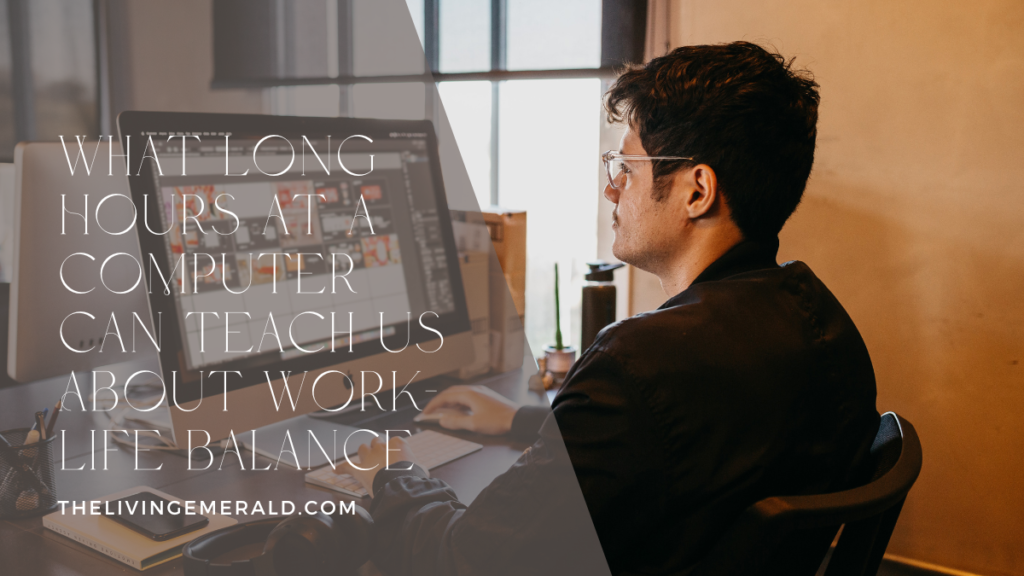
When work is hurting you, the signs rarely show up as a single dramatic moment. They show up as a stiff neck that doesn’t fully loosen anymore, a sleep schedule that keeps sliding later, and a low background hum of tiredness that a weekend off no longer fixes. Running a small business for years — long stretches at a desk, client deadlines that don’t care what time it is, income that isn’t always steady enough to justify slowing down — makes it easy to treat your body as the last thing on the priority list. It works, until it stops working. When Work Is Hurting You, the Body Tells You Before You Admit It Posture problems, eye strain, and disrupted sleep don’t usually arrive with a warning label. They accumulate quietly across months of “I’ll fix this once things calm down” — and for anyone self-employed, things rarely calm down on their own schedule. The deadline that feels urgent today will be replaced by another one tomorrow. Mayo Clinic notes that sustained stress shows up physically long before it’s consciously acknowledged, which is exactly what makes it easy to ignore. The honest starting point isn’t a dramatic lifestyle overhaul. It’s noticing which specific habit is doing the most damage right now — screen distance, sitting for six hours straight, skipping meals during a rush — and treating that one thing as worth fixing this week, not someday. When Work Is Hurting You, “I’ll Rest Later” Doesn’t Work Inconsistent income makes rest feel irresponsible. If this month’s orders are strong, stopping feels like leaving money on the table. If they’re slow, stopping feels like falling further behind. Either way, the business always seems to have a good reason for the body to wait. It never actually gets a natural pause. The habits that hold up are the ones built into the workday itself, not the ones that depend on finding free time — because for someone working largely alone, free time is rarely just sitting there waiting to be claimed. Small, Repeatable Habits That Fit an Unpredictable Schedule A few habits that survive a genuinely irregular workload: standing up and moving for a couple of minutes every hour rather than waiting for a natural break that may not come; keeping water at the desk instead of relying on remembering to drink; and setting one fixed cutoff time in the evening that client messages don’t get to override, even during a busy stretch. None of these require a slow season to start. They’re designed to work inside a busy, unpredictable one, which is the only kind of season most small-business schedules actually offer. When Work Is Hurting You, Take It Seriously Without Becoming an Alarmist This isn’t a claim to medical expertise, and it isn’t a suggestion that every tired evening is a crisis. It’s a reminder that a body under sustained pressure — physical and financial — deserves the same planning attention a business gets. If something persists (pain that doesn’t ease, sleep that stays broken for weeks), that’s a conversation for a doctor, not a productivity hack. What This Looks Like on an Actual Bad Week A genuinely bad week doesn’t leave room for an hour at the gym or a proper meal-prep Sunday, and pretending otherwise is usually why health habits collapse the first time work gets hard. What survives a bad week is smaller than that: a two-minute stretch between calls, water within reach instead of three rooms away, and a hard stop time in the evening that gets protected even if the inbox isn’t empty. The habits worth building are the ones that still happen on the worst week of the month, not just the calm ones — because the worst weeks are exactly when the body needs them most, and exactly when they’re easiest to skip. When Work Is Hurting You: A Realistic Next Step Pick the one habit above that’s easiest to start tomorrow, not the one that sounds most impressive. Rebuilding daily habits after years of putting work first isn’t about a single big change — it’s about choosing something small enough to actually keep doing once the next deadline shows up, because it always does. Related Reading This connects closely to Why Turning 40 Can Be a Reason to Rebuild Your Daily Habits. And if the workload itself is the deeper issue, What to Do When the Path You Built Suddenly Changes looks at that from a business angle.
What Long Hours at a Computer Can Teach Us About Work-Life Balance Read More »
FOOD & HEALTH
When your wife says change is needed — a move, a new job, a different way of handling money — the easiest response is to defend how things already are. That reflex protects comfort, not necessarily the marriage. Most couples don’t actually fight about the change itself. They fight about whether one person’s need to be heard is going to be treated as equal to the other’s need for stability. Both are legitimate. Neither one automatically wins. When Your Wife Says Change, Your First Job Isn’t to Decide The instinct in a big disagreement — relocating for work, changing how the household runs, stepping back from something familiar — is to jump straight to a verdict: is this a good idea or not. That’s premature. Before either spouse can evaluate the idea fairly, the other has to feel like the request was actually heard, not just processed and filed under “no.” Marriage decisions made this way tend to hold up better, because the losing side (if there is one) at least knows they were taken seriously rather than out-argued. Why the Fear Is Usually Bigger Than the Request When your wife says change and means relocating, it rarely lands as just logistics. It lands as a threat to routine, to the kids’ school, to nearby family, to a version of life you’d built on purpose. Reacting to that fear as if it were the actual argument is where couples get stuck — defending the fear instead of engaging with what’s actually being asked. It helps to separate the two questions honestly: what am I afraid will happen, and is that fear actually about this decision, or about change in general. Those are different conversations, and collapsing them into one argument is how couples end up refighting the same fight for months without resolving either one. What Listening Actually Looks Like When Your Wife Says Change Listening isn’t staying quiet until it’s your turn to make the counter-argument. It’s being able to restate your spouse’s reason back to them in a way they’d agree is fair, before you say anything about your own position. If you can’t do that yet, you’re not ready to respond — you’re still just waiting. Marriage researchers at The Gottman Institute have found this kind of listening is one of the strongest predictors of whether a couple handles conflict well. This is slower than most couples want it to be, especially when a decision has a deadline attached. But a decision made in three unhurried conversations tends to cost a marriage far less than one made in a single tense argument, even if the outcome ends up the same. Neither Spouse Has to Be the Villain It’s tempting to narrate these disagreements afterward with a hero and a villain — the one who “wanted too much” or the one who “wouldn’t budge.” That framing rarely survives honest reflection. Usually both people were protecting something real: one person’s need for growth or relief, the other’s need for continuity and safety for the family. A good outcome accounts for both, even if it can’t fully satisfy both. A Realistic Example of What This Looks Like Take a common version of this: one spouse is offered a role that means relocating, and the other immediately thinks about uprooting the kids from a school they’re settled into. Argued head-on, this becomes “career versus family,” with each side sure the other is undervaluing something important. Slowed down and separated into understanding first, it becomes two people naming what they’re actually protecting — growth and provision on one side, stability and belonging on the other — which is a far easier problem to solve together than a standoff. Couples who navigate this well usually aren’t the ones who agree fastest. They’re the ones who slow down long enough to ask what the other person is actually afraid of losing, before either one starts building a case for why they should get their way. When Your Wife Says Change: A Practical Way to Move Forward When a major change is on the table, try separating the conversation into two clearly different meetings: one where the only goal is to understand each other’s reasons with no decision made, and a second, later one, where you actually decide. Most couples skip the first meeting entirely and wonder why the second one turns into a standoff. If you’re in the middle of one of these conversations right now, the question worth asking isn’t “am I right.” It’s “does my spouse know I actually heard them yet.” Usually, that’s the piece missing — and it’s the one thing entirely within your control to fix today. Related Reading For more on how pressure tests a marriage, see How Financial Pressure Can Turn Husband and Wife Into Opponents. And if the identity strain in this kind of decision falls more on your wife’s side, Why a Woman Is More Than Wife and Mother is worth reading together.
How to Listen When Your Spouse Wants a Major Change Read More »
Love & Relationships