Author name: Olaolu

Food and real life - healthy eating on a budget

Healthy Eating When Money and Time Are Tight

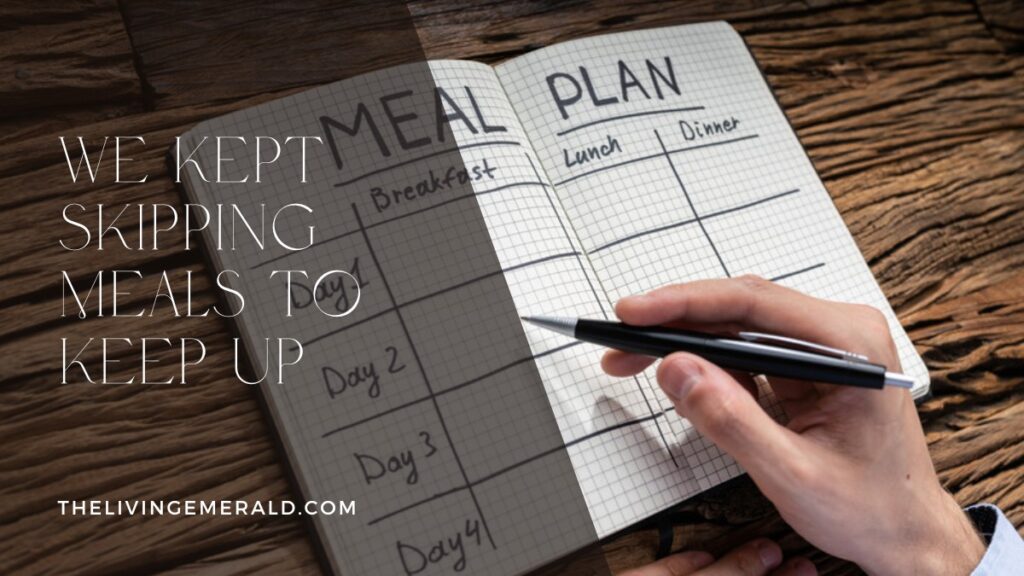
Food and real life do not always cooperate. Food and real life rarely match the tidy meal plans you see online, especially on a tight budget and a busy schedule. Food and real life rarely match the tidy meal plans you see online. Real life includes a work schedule that does not always leave room to cook, a budget that has to stretch across a household, and children who need to eat well whether or not the day went as planned. Healthy eating in that context is not about following a perfect diet — it is about making consistently reasonable choices inside real constraints. The Real Constraint Is Rarely Knowledge — Food And Real Life Most families already know, broadly, what healthier eating looks like — more vegetables, less ultra-processed food, regular meals instead of skipped ones. The actual barrier is usually time and money, not information. Any advice that ignores that reality is not practical advice, it is just a longer list of things to feel guilty about. Build Around a Few Affordable, Reliable Staples Rather than chasing variety for its own sake, it helps to build meals around a small rotation of affordable, nutritious staples that a household actually likes and can prepare quickly. In a Nigerian household, that often includes beans, eggs, and locally available vegetables — all genuinely nutritious, all relatively inexpensive compared to many alternatives, and all flexible enough to appear in several different meals through the week rather than requiring a new recipe every day. This lines up with wider nutrition guidance too — Harvard’s own nutrition research points to beans, eggs and seasonal produce as consistently among the most nutritious, budget-friendly foods available, regardless of where in the world you are shopping. Plan Around the Week You Actually Have A meal plan built for an ideal week collapses the moment a real week happens — a late meeting, a sick child, an unexpected errand. A steadier approach is planning around the schedule you realistically expect, including the busy days, and deciding in advance what the fallback meal looks like on those days so a busy evening does not automatically become a fast-food evening by default. Cook Once, Eat More Than Once Time pressure is often the bigger obstacle than money. Preparing a larger pot of something simple — beans, stew, a pot of soup — once and portioning it across two or three meals reduces both the daily cooking burden and the temptation to buy convenient but less nutritious food on the busiest days. Protect One Meal a Day on Purpose Not every meal needs to be planned perfectly, but protecting at least one meal a day — often breakfast — from being skipped or rushed past makes a real difference to how the rest of the day goes for both parents and children. Skipped meals accumulate a cost that is easy to underestimate until it catches up with you, and a simple, fast breakfast is often easier to build a habit around than an elaborate dinner. If mornings are the hardest meal to manage, a genuinely quick option can still be nutritious — a fast, three-in-one breakfast can be ready in about ten minutes without sacrificing what a growing family actually needs. Remember Food Feeds More Than the Body What a family eats also shapes mood, focus and how everyone handles the pressures of an ordinary day. The connection between food and mental wellbeing is real, which is one more reason consistent, reasonable meals matter more than occasional perfect ones. A Practical Next Step Choose three affordable staples your household already likes, and plan this week’s meals around rotating them rather than searching for entirely new recipes. Protect one meal a day from being rushed or skipped. That is enough to start — healthy eating in real life is built from repeatable, reasonable choices, not a perfect week you will only manage once. Food and real life will never look like the picture-perfect meal plans online, and that is fine. Food and real life just need to work together consistently, one realistic choice at a time.

Healthy Eating When Money and Time Are Tight Read More »

FOOD & HEALTH
Life stops going to plan - path suddenly changes

What to Do When the Path You Built Suddenly Changes

Life stops going to plan for everyone eventually. Life stops going to plan quietly, usually — a client goes silent, a platform changes, a season simply ends without warning. When life stops going to plan, it rarely announces itself with warning. A steady client stops calling. A platform changes its rules overnight and the reach you built on it quietly disappears. A month you expected to look like every other month instead looks nothing like it. The path you had built, the one that felt solid, suddenly does not hold the same weight it used to. I have run a small graphic-design and digital-printing business for years, largely on my own, and I have felt this exact kind of ground-shift more than once — a dependable client goes quiet, a platform restricts something that used to bring in work, income that felt predictable stops being predictable. None of it arrives with a clear explanation. It just arrives. The First Instinct Is Usually the Wrong One — Life Stops Going To Plan When the path changes suddenly, the first instinct is often to panic-fix everything at once — chase every possible new client, try every platform, say yes to anything that might replace what was lost. It feels productive. Mostly, it just spreads limited energy across too many directions and delays the one thing that actually helps: an honest assessment of what changed and why. Separate What You Can Influence From What You Cannot A platform’s policy change is not something you can reverse. A client’s changed priorities are not something you can argue back into place. Spending energy fighting decisions that were never yours to make is energy that is not going toward the decisions that are actually yours — how you respond, what you build next, and where you place your effort now. This distinction sounds obvious stated plainly, but under real pressure it is easy to lose. The practical move is to write down, honestly, what part of the situation is outside your control and let that part go, even if letting go does not feel satisfying. Diversify Before You Need To, Not After One of the clearest lessons from working largely alone in a small business is that depending heavily on one client, one platform, or one income stream is comfortable right up until it stops working — and then it is very uncomfortable all at once. Research on small and midsize business resilience points to the same pattern: businesses that survive sudden disruption well are usually the ones that had already spread their income and operations across more than one source before the disruption arrived. If you are reading this after the disruption has already happened, the lesson still applies going forward — rebuild toward more than one source of income or client relationship this time, even if it takes longer to establish. Rebuild the Foundation, Not Just the Income It is tempting to treat the goal as simply replacing the lost income as fast as possible. A steadier goal is rebuilding the underlying structure that made the business work in the first place — your actual skill, your reputation, your systems for finding and keeping clients — so that whatever replaces the lost income sits on a stronger foundation than before, not just a faster patch. What This Looks Like in Practice Name the loss specifically. Not “things are hard,” but the exact client, platform or income stream that changed, and what it actually cost you. Vague problems produce vague responses; specific problems produce specific decisions. Pick one new direction, not five. Under pressure, trying everything at once usually means finishing nothing well. Choose the one most realistic next step and give it genuine effort before adding another. Build the habit of reviewing dependency regularly. Once a quarter, honestly ask what percentage of your income or attention sits in one place, and whether that concentration is still acceptable. A Practical Next Step Take fifteen minutes today to write down exactly what changed, what part of it you can influence, and one specific action you can take this week that moves you toward a steadier foundation — not a full recovery plan, just one honest step. If the uncertainty itself feels heavier than the practical problem, that fear is worth addressing directly rather than pushing past silently, and if it helps to remember that purpose was never only tied to one path, your gifts and talents remain yours regardless of which client or platform changes around you. The path you built was never the only path available to you. It was simply the one you were on. What matters now is which honest step you take next. When life stops going to plan, it is not the end of your story — it is an invitation to write the next chapter with open hands. Life stops going to plan more often than we admit, and each time, growth is possible.

What to Do When the Path You Built Suddenly Changes Read More »

LIFE
Present when life is busy - father and child

7 Powerful Ways to Be Present When Life Is Busy

Being present when life is busy does not usually look dramatic. Present when life is busy simply means showing up for the ordinary moments most fathers are tempted to rush past. Intentional fatherhood does not usually announce itself in grand gestures. Most days, it looks like showing up for the ordinary moments that are easy to rush past — the ones that do not feel significant in the moment but quietly tell a child whether their father is truly there or just physically present. Life is genuinely busy. Work does not slow down to make room for fatherhood, and no father gets a version of the week with fewer demands in it. The question was never whether life would be busy. It is what presence can still look like inside that busyness. 1. Protect One Non-Negotiable Routine — Present When Life Is Busy For me, that routine is the school morning — waking the children, helping them get ready, talking with them at breakfast, and seeing them off before the day pulls everyone in different directions. It is not dramatic. Some mornings it is rushed and imperfect. But it happens consistently, and consistency is what makes a child feel secure, not perfection. 2. Use Transition Moments, Not Just Free Time Waiting for perfect, uninterrupted free time to be present with your children means waiting for something that rarely comes. The car ride, the walk to the gate, the few minutes before bed — these transition moments are usually more available than a long free evening, and children remember them just as much. 3. Ask Questions That Require More Than One Word “How was school?” almost always gets “fine.” A more specific question — about a particular subject, a particular friend, a particular part of the day — invites an actual conversation instead of a reflex answer, even if it only takes an extra thirty seconds. 4. Let Your Children See You Try, Not Just Succeed Presence is not the same as having everything figured out. Being honest about a mistake, admitting when you are tired, or simply saying “I am sorry I was distracted earlier” teaches a child something a perfectly composed father never could: that showing up honestly matters more than showing up flawlessly. 5. Put the Phone Down for the Small Windows You Do Have The temptation is to treat small pockets of time as unimportant, since they are short anyway — so the phone stays out. But a child rarely measures presence in total minutes; they measure it in whether you were actually looking at them during the minutes you had. 6. Make Room for Play, Even Briefly Play is not a break from parenting; research on father involvement consistently links active, engaged play with stronger social and emotional development in children. It does not need to be elaborate. A few minutes of genuine, undistracted play does more than an hour of distracted supervision. 7. Show Up the Same Way on the Hard Days Anyone can be present when work is light and the week is calm. The version of presence that actually shapes a child is the one that shows up on the hard, busy, tired days too — even in a smaller, scaled-down form. A short version of the morning routine still counts. A brief conversation still counts. Showing up imperfectly still counts. A More Honest View of Fatherhood None of this describes a father who has it all figured out. It describes a father trying, imperfectly but consistently, to stay present inside a genuinely full life. That is a more honest and more achievable standard than the idea that presence requires unlimited time. If discipline and daily structure are also part of what feels heavy right now, it helps to know most parenting teams wrestle with the same tension, and if the anxiety of “am I doing enough” ever creeps in, that worry is more common than it feels in the moment. A Practical Next Step Pick one ordinary moment already built into your day — a morning routine, a drive, a bedtime — and decide today that it will be fully yours, phone down, attention present, for however many minutes it lasts. That one small decision, repeated, is what intentional fatherhood actually looks like. If life is busy this season, being present when life is busy is still possible in small, repeatable ways. Present when life is busy is not about doing more — it is about showing up on purpose.

7 Powerful Ways to Be Present When Life Is Busy Read More »

HAPPY GREAT DAD
Health after 40 - rebuilding daily habits

Why Turning 40 Can Be a Reason to Rebuild Your Daily Habits

Health after 40 rarely fails all at once. Health after 40 tends to slip quietly — a little slower recovery, a little less energy — until you finally decide to pay attention. Health after 40 has a way of announcing itself quietly, then all at once. You do not wake up on your fortieth birthday and suddenly feel different. What actually happens is smaller: you notice you recover slower after a stretch of late nights, a plate you used to finish without thinking now sits heavier than expected, and the body starts sending small reminders that it is keeping score of years you were not counting. Forty is not a medical cliff. It is simply a reasonable point to stop running on autopilot and start being honest about the habits that got you here. Why This Decade Is a Fair Trigger to Reassess — Health After 40 There is nothing magical about the number 40. What makes it a useful checkpoint is that it usually arrives with more responsibility, not less — a business to run, a household to hold up, people depending on decisions you make daily. It is exactly the kind of season where taking care of yourself quietly falls to the bottom of the list, because it never feels as urgent as the next deadline or the next client. I have run a small graphic-design and printing business for years, largely on my own, and I know what that pressure looks like from the inside — inconsistent income some months, clients who need things faster than seems reasonable, vendors to manage, and a schedule that expands to fill whatever time exists. In that kind of season, rest, movement and food become the first three things sacrificed, precisely because none of them scream for attention the way a client deadline does. What Tends to Slip First For most people carrying real workload and family responsibility, three things erode quietly: Sleep becomes the easiest thing to shorten when the day runs long, even though it is the habit with the widest effect on everything else. Movement disappears first from the schedule, not because anyone decides to stop, but because sitting at a desk or behind a counter all day never feels like a decision — it just happens. Food shifts from prepared to convenient, which is rarely a conscious downgrade, just the path of least resistance on a busy day. None of this means something is medically wrong. It usually just means the habits built for a lighter season have not been updated for a heavier one. Rebuilding Without Overhauling Everything The instinct after a wake-up moment is to overhaul everything at once — a strict new diet, an ambitious workout plan, an early bedtime that lasts three days. Most of that collapses quickly because it was never designed to survive a real workload. A steadier approach is to rebuild one habit at a time, sized to fit the life you actually have, not the life you wish you had more time for. Health guidance for this decade consistently points to a few unglamorous basics — consistent sleep, regular movement (even brisk walking counts), and meals that are prepared rather than grabbed — done consistently, over flashy or extreme changes done briefly. What This Can Look Like Practically A few realistic starting points, chosen deliberately because they fit around a demanding schedule rather than compete with it: Protect one sleep boundary. Pick a single, non-negotiable cutoff time for screens or work, even if the full night’s sleep still isn’t perfect. Attach movement to something you already do. A walk during a phone call, stairs instead of a lift, ten minutes before the day starts — small and repeatable beats ambitious and abandoned. Fix one meal, not every meal. Most people do not need a full diet overhaul; they need one meal of the day — often breakfast — to stop being an afterthought. If mealtimes have quietly become chaotic under pressure, it is worth looking honestly at what that is actually costing you. It also helps to remember that food is not only fuel for the body — what you eat has a real, quieter effect on how clearly you think and how well you handle pressure too. A Practical Next Step Choose one of the three basics — sleep, movement, or one meal — and commit to a small, specific version of it this week. Not a resolution, just one repeatable action you can actually sustain alongside the life you already have. Turning 40 does not require you to become a different person. It just asks whether the habits that got you here are still the ones you want carrying you through the next decade. Health after 40 is not about chasing your twenties again. Health after 40 is about building habits honest enough to carry you through the next forty.

Why Turning 40 Can Be a Reason to Rebuild Your Daily Habits Read More »

FOOD & HEALTH
Financial pressure in marriage - husband and wife under stress

How Financial Pressure Can Turn Husband and Wife Into Opponents

Financial pressure has a quiet way of turning a marriage into a competition. Financial pressure does not usually announce itself as the enemy — it just makes two people start keeping score against each other. Marriage under pressure rarely breaks over one big fight. It usually wears down in the small, repeated moments where money turns two people who are supposed to be on the same team into two people quietly keeping score against each other. That is the strange thing about financial pressure in a home. It is not really about the money. It is about what the money starts to represent — whose fault the shortfall is, who is sacrificing more, who gets to decide what the family can and cannot afford this month. How a Team Becomes Two Opponents — Financial Pressure It happens gradually. A bill comes in higher than expected. A request from extended family arrives at the worst possible time. An opportunity looks good on paper, so one of you says yes to it quickly, without fully checking what it will cost in time, fuel, attention, or money that was already committed elsewhere. None of these moments are betrayals. But add enough of them together, without a shared conversation, and both people start negotiating from opposite sides instead of working from the same side of the table. A Lesson I Have Had to Relearn One pattern I keep having to correct in myself is saying yes too quickly — to a request, an obligation, a “quick” favor that turns out to cost far more than it looked like it would. It is rarely one catastrophic yes. It is several reasonable-sounding yeses that quietly drain time, fuel, money, and attention that a family actually needed somewhere else. The better pattern, the one I am still building, is to pause before answering, honestly check what capacity actually exists right now, and then respond on purpose instead of on reflex. That single habit — pause, check capacity, then decide — protects a marriage from a slow accumulation of pressure that neither spouse ever consciously agreed to carry. Why Transparency Beats Blame When money is tight, the instinct is to look for who caused it. Blame feels productive in the moment — it gives the pressure somewhere to go. But blame does not solve a shortfall; it just adds a second problem, a relational one, on top of the financial one. Transparency does something blame cannot. It puts both people back on the same side of the problem. Saying plainly, “here is what we have, here is what is coming, here is what I am worried about” turns a private fear into a shared decision. Even when the numbers themselves cannot immediately change, the dynamic between the two of you can. Research on couples and money backs this up directly — financial stress is one of the most persistent sources of conflict in relationships, largely because money arguments tend to surface deeper fears and values rather than staying about the number itself. Recognizing that is often more useful than trying to win the argument about the number. What This Looks Like in Practice A few practical shifts help most: Talk about money on a schedule, not only in a crisis. A short, calm check-in when things are fine builds the habit you will need when things are not fine. Separate the person from the pressure. When you feel the urge to say “you always” or “you never,” pause. That sentence is usually the pressure talking, not the full truth about your spouse. Agree on a pause-before-yes rule together. Any new financial commitment above an agreed size gets a conversation first, not a unilateral yes in the moment. None of this requires either spouse to be the villain. Financial pressure is the actual opponent here — the goal is making sure it stays outside the marriage instead of moving inside it. A Practical Next Step Pick one upcoming financial decision, even a small one, and bring it to your spouse before deciding rather than after. Ask the pause-before-yes question out loud: “What will this actually cost us in time, money, or attention, and can we really carry it right now?” If money has already become a quiet source of tension in your home, it is worth naming that directly rather than letting it sit unspoken, and if the marriage itself feels strained under the weight of it, it is never too early to rebuild the foundation on purpose. What would change in your home this month if every financial yes came with one honest pause first? If financial pressure is testing your marriage right now, remember the money is not actually the opponent. Financial pressure only wins when it convinces a husband and wife to compete instead of communicate.

How Financial Pressure Can Turn Husband and Wife Into Opponents Read More »

Love & Relationships
Shopping Cart
Scroll to Top