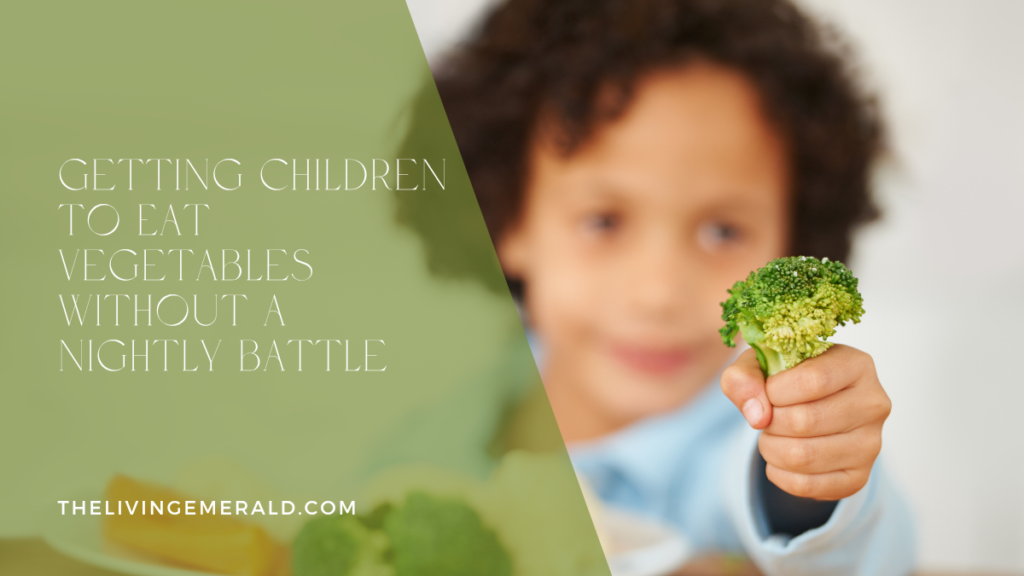
Getting children to eat vegetables without a nightly fight is possible, and it rarely starts with a new recipe. Almost every parent has stood at the dinner table negotiating over three pieces of carrot like a hostage situation. The nightly vegetable standoff is common enough that it’s worth asking whether the fight itself, not the vegetables, is the actual problem.
Why the Battle Usually Starts
Most vegetable standoffs begin with pressure. A parent, worried about nutrition, pushes harder as the child pushes back, and within a few meals eating vegetables has become a contest of wills instead of a food choice. Children are remarkably consistent at resisting food they feel forced into, and remarkably open to food they feel some ownership over.
Taste plays a smaller role here than most parents assume. Texture, novelty, and control usually matter more to a five-year-old than flavor does.
Lower the Pressure Before You Change the Menu
Pediatric feeding specialists generally recommend a “division of responsibility”: the parent decides what food is offered and when; the child decides whether and how much of it to eat. The Ellyn Satter Institute, a widely cited authority on child feeding, has built this approach around decades of research showing that pressure to eat reliably backfires, while low-pressure repeated exposure increases acceptance over time.
In practice, that means vegetables go on the plate without a negotiation attached. No bribery, no “three more bites,” no visible disappointment if they’re left untouched. It feels like doing less. It usually works better than doing more.
Repetition Beats Persuasion
Research on food acceptance consistently finds that children often need eight to fifteen exposures to a new food before they’ll willingly eat it — not eight attempts to convince them, just eight calm appearances of the food on the plate. A vegetable that gets pulled from the rotation after two rejected nights never gets the chance to become familiar.
Pair new vegetables with something you already know they’ll eat, so the plate isn’t a complete unknown. Familiarity lowers resistance faster than argument does.
Let Them Touch the Food Before They’re Asked to Eat It
Children who help wash, peel, or arrange vegetables are measurably more willing to taste them afterward — ownership changes the food’s status from “something being done to me” to “something I made.” This doesn’t require elaborate cooking projects. Snapping the ends off green beans or arranging pepper strips on a plate counts.
What to Actually Say at the Table
Replace “eat your vegetables” with something that removes the standoff: “There’s broccoli on the table if you want some.” Then let it be true that they might not want some, tonight. Consistency across many dinners does more than intensity on any single one.
If a bite happens, let it be unremarkable — a flat “thanks for trying that” works better than a celebration, which can make a child suspicious that something was being put over on them.
When to Actually Worry
A child who eats zero vegetables for a few weeks while otherwise eating a reasonably varied diet is common and not usually a medical concern. A child who is restricting entire food groups, losing weight, or showing significant distress around meals is a different situation, and worth raising with a pediatrician rather than solving with another tactic.
Most nightly vegetable battles are not actually about nutrition. They’re about two people trying to control the same five minutes. Handing a reasonable amount of that control back to your child, on a plate with no strings attached, tends to end the fight faster than winning it ever did.
For more on keeping family meals sane during busy seasons, see Rice Every Day? 5 Practical Ways to Build Variety Into a Busy Family Menu.