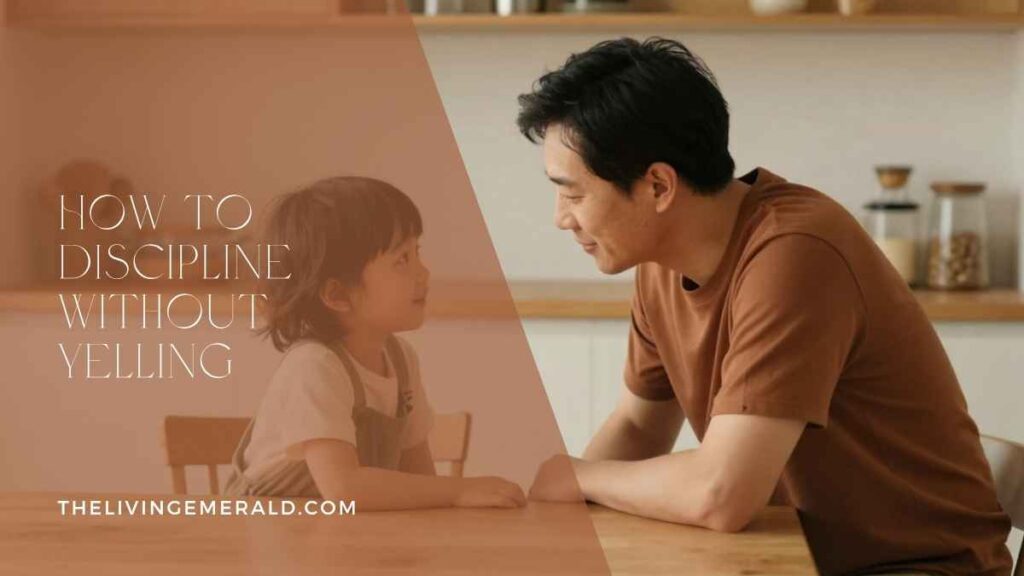
Learning to discipline without yelling doesn’t mean letting things slide — it means holding the line a different way.
You didn’t plan to yell. It just happened — the fifth time they ignored you, the mess, the lateness, the whining, all stacked up until your voice did what your words alone weren’t doing. And then came the familiar guilt: you didn’t want to be this parent, and here you are again.
Here’s the more useful question than “how do I never yell again”: what actually works better, and why does yelling keep feeling like the only option in the moment?
Why Yelling Feels Necessary (and Why It Usually Isn’t)
Yelling works in the short term — it gets immediate compliance because it triggers a stress response. That’s exactly why it’s so hard to stop using: it’s reinforced every time it “works.” But research on child discipline consistently shows that the compliance from yelling is about fear in the moment, not learning for next time, and that frequent yelling is associated with worse behavior over time, not better — kids habituate to it, requiring more volume for the same effect, while the actual lesson (“why this behavior matters”) rarely lands.
The discomfort you feel after yelling isn’t just guilt for its own sake. It’s often an accurate signal that it didn’t actually teach what you wanted taught.
What Scripture Says to Fathers and Mothers Specifically
“Fathers, do not exasperate your children; instead, bring them up in the training and instruction of the Lord” (Ephesians 6:4). The word “exasperate” is worth sitting with — it’s not a ban on correction or boundaries, it’s a warning against discipline that provokes rather than instructs. Yelling, especially repeated yelling, tends to do exactly that: it provokes a reaction instead of teaching a lesson.
What to Do in the Moment Instead
Lower your volume as the behavior escalates, not raise it. It feels counterintuitive, but a quieter, firmer voice often gets more attention than a louder one, because it breaks the expected pattern and makes kids actually listen for what you’re saying instead of just reacting to how loud you are.
Get physically closer before you speak. Crossing the room to kneel at their level and say something firmly, quietly, up close, usually lands harder than the same words shouted from across the house.
Name the behavior and the boundary in one short sentence, then stop talking. “Hitting isn’t okay. You need to sit here until you’re calm.” Long lectures in a heated moment rarely get absorbed — they just extend the conflict.
If you feel yourself about to yell, say so out loud instead: “I’m getting really frustrated. I need a second.” This models exactly what you want them to eventually do with their own big feelings, and it buys you the pause you need.
When You Do Yell Anyway
You will, sometimes. The repair matters more than the perfect streak. “I yelled, and that wasn’t fair to you. I was frustrated, and I handled it badly. I’m sorry” teaches a lesson yelling alone never could: that people who love you can get it wrong and still own it. That’s a skill they’ll need for the rest of their life, and you’re the one positioned to model it.
If what tends to trigger the yelling is a meltdown over losing a game or not getting their way, Teaching Children to Lose a Game Without Falling Apart gets at that specific flashpoint directly.