
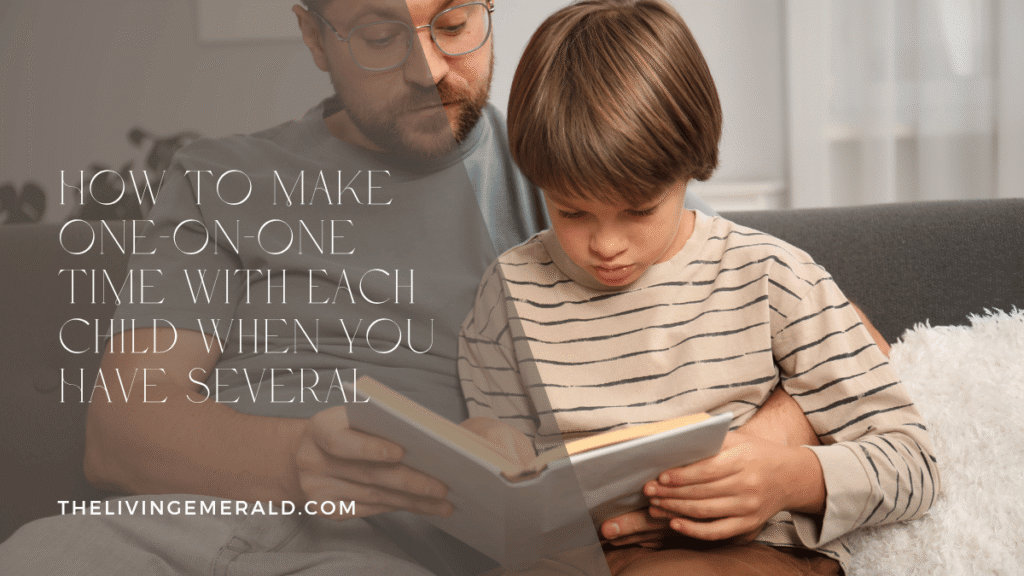
Here’s how to make one-on-one time with each child when you have several, without it becoming one more thing to schedule.
With more than one child, it’s easy for attention to default to whoever’s loudest in the moment — the one with the problem, the complaint, the immediate need. The quieter kids can go days getting only group attention, never one-on-one.
It Doesn’t Need to Be Long to Count
Fifteen minutes of real, undistracted attention registers with a child more than an hour of being in the same room while you’re half-present. The length matters less than whether your phone is down and your attention is actually on them, not managing the other kids at the same time.
Attach It to Something Already Happening
One-on-one time is easier to sustain when it rides along with an existing routine instead of becoming one more thing to schedule. A drive to practice alone with one child. Being the one who does bedtime with a specific kid on a specific night. Doing the dishes together while the others are occupied elsewhere. These small windows add up without needing a calendar entry.
Rotate on Purpose, Not by Accident
If you have more than two children, it helps to actually track — even just mentally — who had real one-on-one time last and who hasn’t in a while. Without that, the same child tends to get the extra attention repeatedly simply because they ask for it more.
Kids don’t need equal minutes with you every single day to feel seen. They need to know that, over time, their turn reliably comes — and that when it does, you’re actually there.