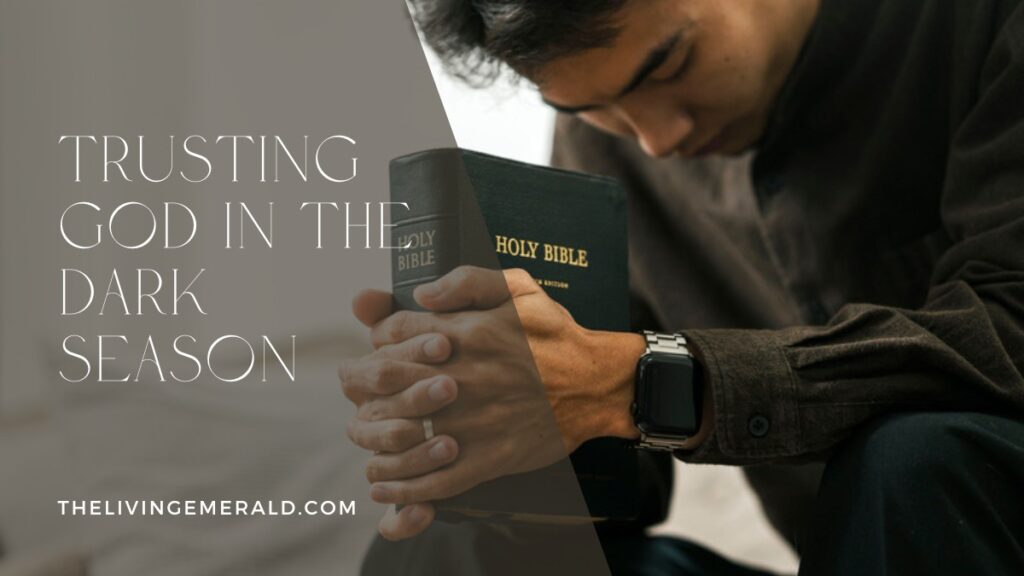

When prayer feels empty, it can feel like something has gone wrong between you and God. It hasn’t. Prayer feels empty sometimes even for people whose faith is real and growing.
There’s a particular kind of guilt that doesn’t get talked about much in church: the guilt of still loving God but not wanting to pray. Not doubting Him. Not walking away from Him. Just… tired. Empty. Going through the motions of a conversation that used to feel alive and now feels like reading a script you’ve read too many times.
If that’s where you are right now, this isn’t an article that’s going to shame you back into a prayer routine. It’s an honest look at what’s actually happening when prayer goes quiet, and what Scripture actually says about it — not the sanitized Sunday-school version, but the real one.
Why Prayer Feels Empty Even When Faith Doesn’t
Spiritual exhaustion is rarely about God. It’s usually about capacity. Marriage under pressure, work that won’t let up, a body that’s tired, a mind that’s been carrying more than it was built to carry — prayer is often the first thing to go quiet, not because faith is gone, but because there’s nothing left in the tank to bring to it. It’s the same weariness behind what happens when life feels unbalanced and you have to learn to let go.
This is worth naming clearly: not wanting to pray is not the same as not believing. A lot of believers quietly assume it is, and that assumption does more damage than the tiredness itself. It turns exhaustion into shame, and shame makes people hide from God instead of bringing the tiredness to Him.
What Scripture Actually Says — And What It Doesn’t
It helps to separate three things here, because a lot of well-meaning advice blurs them together: what the text explicitly says, reasonable inference, and personal application.
What the text says: In Gethsemane, the night before His crucifixion, Jesus prayed the same request three times — “if it is possible, let this cup pass from me” (Matthew 26:39-44) — and Scripture records His soul as “overwhelmed with sorrow to the point of death” (Matthew 26:38). This wasn’t performed composure. It was raw, repeated, exhausted prayer from someone who never sinned and never doubted the Father.
Reasonable inference: If the most faith-filled prayer in Scripture came from a place of sorrow and repetition rather than eloquence and ease, then prayer was never meant to require emotional readiness to be valid. Exhaustion and faith clearly coexisted in that garden.
Interpretation and application: This doesn’t mean every tired prayer is automatically deep or good — it means God doesn’t require you to feel something before you’re allowed to bring it to Him. The Psalms make the same point in a different key: roughly a third of them are laments, several ending without a tidy resolution (Psalm 88 is the clearest example — it ends in darkness, not victory, and it’s still Scripture).
The Difference Between Dry Prayer and Absent Prayer
There’s a real difference between prayer that feels dry and prayer that has quietly stopped altogether, and it’s worth being honest with yourself about which one you’re actually in.
Dry prayer still shows up. It might be three sentences instead of thirty minutes. It might sound more like “I don’t have anything today, but I’m here” than a structured conversation. That’s not failure — that’s still contact.
Absent prayer is different. It’s the slow drift where the guilt of not praying becomes a reason to avoid praying even more, because facing God feels like facing an overdue conversation. That drift is the one worth interrupting early, before distance becomes the new normal.
What Actually Helps When You’re in This Season
A few practical shifts, none of them requiring you to manufacture feelings you don’t have:
- Say the tiredness out loud to God instead of around Him. “I don’t feel like praying right now, and I don’t fully understand why” is itself a prayer. It’s more honest than most polished ones.
- Shrink the target. If thirty minutes feels impossible, two minutes isn’t a lesser version of prayer — it’s still prayer. Consistency at a smaller size beats an ambitious routine you keep failing.
- Borrow words when you don’t have your own. This is what the Psalms are for. Reading a lament aloud, even without adding your own words, is still bringing yourself before God.
- Separate the season from the relationship. A dry season in prayer is a season, not a verdict on where you stand with God. Treating it as evidence of spiritual failure usually makes it last longer.
The Honest Takeaway
God was never asking for your best emotional performance in prayer. He was asking for you — tired, distracted, unsure what to say, all of it. The version of you that shows up empty is not a disappointing substitute for the version that shows up inspired. It’s just as real, and it’s still welcome.
If prayer feels empty right now, that’s not the end of the conversation with God — it might just be the most honest sentence in it. If you’re also wrestling with what it looks like to keep believing when life doesn’t go the way faith promised, this piece on finding purpose in every season is a good next read.
If you’re in this season, what’s helped you keep showing up, even in small ways? Share in the comments — someone else reading this needs to hear it’s not just them.
If prayer feels empty tonight, let that be permission to sit quietly in God’s presence rather than perform words you don’t feel. Prayer feels empty sometimes right before it becomes real again.