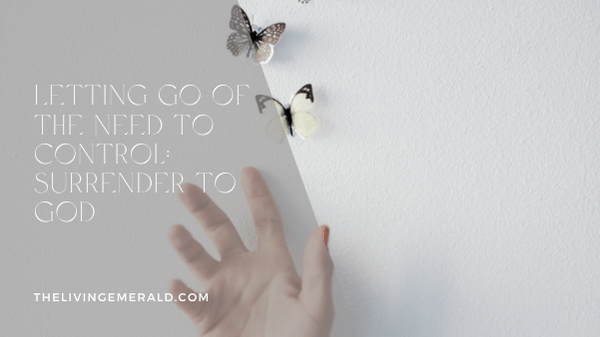
“Just surrender it to God” is one of the most repeated pieces of Christian advice, and one of the hardest to actually practice. Surrender to God isn’t a single emotional moment where control disappears forever — it’s a daily, sometimes hourly, choice to hand back what your hands were never meant to carry alone.
1. Surrender Starts With Admitting You’ve Been Gripping Tightly
You can’t let go of something you won’t admit you’re holding. Before surrender is possible, honesty is required: naming the outcome, relationship, or fear you’ve been quietly trying to control through worry, overworking, or managing everyone around you. Surrender begins with that uncomfortable admission.
2. It Doesn’t Mean Passivity
A common misunderstanding treats surrender as doing nothing and waiting for God to act. In practice, surrender usually means doing the faithful, obedient next step and releasing your grip on the outcome — applying for the job and trusting God with whether it’s granted, having the hard conversation and trusting Him with how it’s received.
3. It Will Feel Like Loss Before It Feels Like Peace
Letting go of control over something you’ve been managing out of fear rarely feels immediately peaceful. It often feels like free-falling first. That discomfort isn’t a sign you’re doing it wrong — it’s the natural cost of releasing something you’ve been holding tightly for a long time.
4. Re-Surrender Is Normal, Not Failure
You will surrender something to God and then, days or hours later, find yourself quietly gripping it again. This isn’t spiritual failure — it’s the normal rhythm of trust. Jesus himself modeled repeated surrender in Gethsemane (Luke 22:42), not a one-time decision but an ongoing, honest wrestling.
5. What You Gain Is Usually Better Than What You Controlled
What control offers is an illusion of safety. What surrender offers, eventually, is real peace — not because every outcome goes the way you hoped, but because you’re no longer carrying the full weight of outcomes that were never yours to control in the first place.
A Simple Daily Practice of Surrender
If surrender feels too abstract to practice, try this: each morning, name one specific thing you’re tempted to control today, and say out loud or in prayer, “I release this to You.” It won’t instantly dissolve the urge to manage it yourself, but naming it consistently, day after day, slowly retrains where your trust is actually placed.
Surrender Doesn’t Mean You Stop Caring
A common fear is that surrendering control means becoming indifferent to outcomes you deeply care about. In truth, you can care deeply about an outcome and still release your grip on controlling it — these aren’t contradictions. Surrender changes how you hold the outcome, not whether it matters to you.
What Surrender Looks Like in an Ordinary Tuesday
Surrender isn’t reserved for life’s biggest crossroads — it shows up in ordinary moments too: releasing the need to control how a conversation goes, trusting God with a frustrating delay, letting go of the outcome of something small you can’t actually control anyway. Practicing surrender in these small, everyday moments builds the muscle you’ll need for the larger ones.
A Prayer for When Surrender Feels Too Hard
On days when even the idea of letting go feels impossible, it’s okay to simply pray, “God, I want to trust You more than I do right now — help me get there.” Honesty about your struggle to surrender is itself a form of surrender; it’s trusting God with your doubt, not just your decisions.
Living Out Surrender to God Today
Surrender to God isn’t a destination you arrive at once — it’s a daily practice of choosing surrender to God again, each time control tries to creep back in. Keep choosing surrender to God, one day at a time.
If you’re in a season that calls for this kind of letting go, you may also find what the Bible says about waiting on God’s timing and how to pray when you don’t know what to say good companion reads.
What Surrender to God Looks Like on an Ordinary Day
Surrender to God rarely feels dramatic in the moment. Most days it looks like choosing to pray instead of plan every outcome yourself, or staying quiet instead of forcing your own way. Keep practicing that small, repeated surrender to God, and the bigger moments of trust will come easier.