
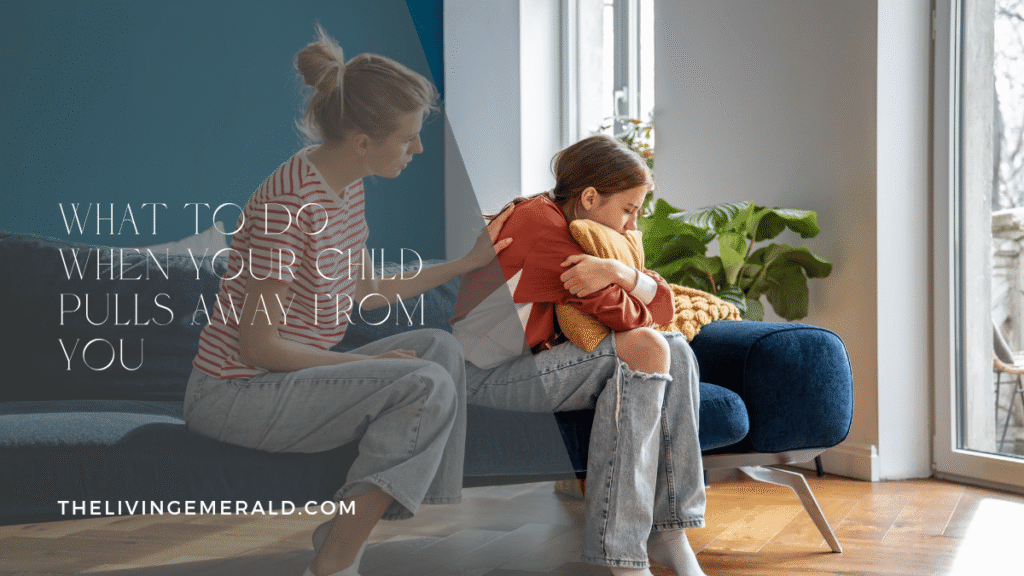
Noticing what to do when your child pulls away from you starts with not mistaking the distance for rejection.
At some point, a child who used to run to you starts keeping their door closed a little more, answering in shorter sentences, choosing their room over the living room. It can feel sudden even though it usually built up gradually, and it can feel personal even when it mostly isn’t.
Don’t Mistake Distance for Rejection
Pulling away is often a normal part of a child — especially a preteen or teen — building their own independence, not a verdict on you as a father. Figuring out what to do when your child pulls away from you starts here: taking it personally tends to make a dad either chase too hard, which pushes further away, or withdraw in hurt, which confirms the distance. Neither helps.
Stay Available Without Demanding Access
Keep showing up in low-pressure ways — offering a ride, being in the room without requiring conversation, asking questions that don’t need a deep answer. Kids who are pulling away often still notice who stayed consistent and who gave up trying. The goal isn’t to force closeness back; it’s to make sure the door stays open on your end, even while theirs is mostly closed.
Find the Moments They’ll Actually Talk
Many kids open up more easily side-by-side than face-to-face — in the car, doing something with their hands, walking somewhere. Direct eye contact and a formal “can we talk” can feel like pressure. A car ride with no agenda often gets more out of a withdrawn kid than a sit-down conversation ever will.
Distance at this stage is usually a phase of growing up, not a verdict on your relationship. Staying steady and available, without forcing it, is most often what brings them back around on their own timeline.
Watch Your Own Reaction First
Knowing what to do when your child pulls away from you starts with you, not them. Before you change anything about how you approach your child, remember what to do when your child pulls away from you is as much about you as it is about them, pay attention to how you’re reacting to the distance itself. A father who feels hurt by the pulling away will often, without meaning to, communicate that hurt through a sharper tone, a sigh, a comment about how things “used to be.”
Kids who are already pulling back are highly sensitive to guilt-tripping, even subtle kinds, and it tends to push them further away rather than closer. The work here isn’t performing unbothered calm — it’s actually separating your own feelings about the change from how you show up for your child in the moment.
What to Do When Your Child Pulls Away From You: Keep the Routines Running
When connection drops off, it’s tempting to manufacture a big moment to force things back to how they were. Those moments can help, but they rarely do the real work by themselves. What usually matters more is whether the small, ordinary routines keep happening: the same drive to school, the same Sunday dinner, the same bedtime check-in, even if it’s now a five-second “night” instead of a ten-minute conversation. Children who are pulling away are often testing whether the relationship can survive without constant effort on their part. Routines that don’t depend on them initiating anything answer that question quietly, over time.
Build One New Ritual Together
Part of what to do when your child pulls away from you is accepting change. Alongside keeping old routines alive, look for one small new ritual that fits who your child is becoming rather than who they used to be. A ten-year-old’s favorite shared activity rarely works for the same child at fourteen. Ask what they’re into lately, and find one low-pressure way to be present in that world with them, even briefly. Once every week or two, done consistently, communicates more than a single big gesture ever will — another quiet answer to what to do when your child pulls away from you.
What to do when your child pulls away from you rarely has a single fix — it’s steadiness, not a perfect conversation, that usually brings them back around on their own timeline. If screen time has become part of what’s pulling your child into their own world, a consistent screen-time routine can help without adding another fight to the relationship, and if honesty has become part of the distance, understanding what’s behind the lying is a closely related next step. The American Academy of Pediatrics also has guidance on family communication worth a look.