
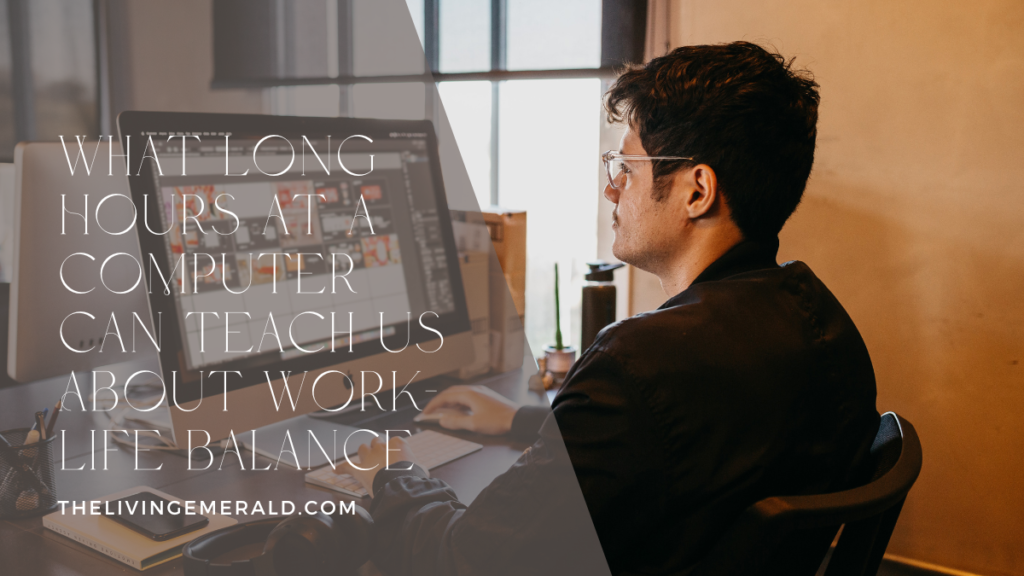
When work is hurting you, the signs rarely show up as a single dramatic moment. They show up as a stiff neck that doesn’t fully loosen anymore, a sleep schedule that keeps sliding later, and a low background hum of tiredness that a weekend off no longer fixes.
Running a small business for years — long stretches at a desk, client deadlines that don’t care what time it is, income that isn’t always steady enough to justify slowing down — makes it easy to treat your body as the last thing on the priority list. It works, until it stops working.
When Work Is Hurting You, the Body Tells You Before You Admit It
Posture problems, eye strain, and disrupted sleep don’t usually arrive with a warning label. They accumulate quietly across months of “I’ll fix this once things calm down” — and for anyone self-employed, things rarely calm down on their own schedule. The deadline that feels urgent today will be replaced by another one tomorrow. Mayo Clinic notes that sustained stress shows up physically long before it’s consciously acknowledged, which is exactly what makes it easy to ignore.
The honest starting point isn’t a dramatic lifestyle overhaul. It’s noticing which specific habit is doing the most damage right now — screen distance, sitting for six hours straight, skipping meals during a rush — and treating that one thing as worth fixing this week, not someday.
When Work Is Hurting You, “I’ll Rest Later” Doesn’t Work
Inconsistent income makes rest feel irresponsible. If this month’s orders are strong, stopping feels like leaving money on the table. If they’re slow, stopping feels like falling further behind. Either way, the business always seems to have a good reason for the body to wait. It never actually gets a natural pause.
The habits that hold up are the ones built into the workday itself, not the ones that depend on finding free time — because for someone working largely alone, free time is rarely just sitting there waiting to be claimed.
Small, Repeatable Habits That Fit an Unpredictable Schedule
A few habits that survive a genuinely irregular workload: standing up and moving for a couple of minutes every hour rather than waiting for a natural break that may not come; keeping water at the desk instead of relying on remembering to drink; and setting one fixed cutoff time in the evening that client messages don’t get to override, even during a busy stretch.
None of these require a slow season to start. They’re designed to work inside a busy, unpredictable one, which is the only kind of season most small-business schedules actually offer.
When Work Is Hurting You, Take It Seriously Without Becoming an Alarmist
This isn’t a claim to medical expertise, and it isn’t a suggestion that every tired evening is a crisis. It’s a reminder that a body under sustained pressure — physical and financial — deserves the same planning attention a business gets. If something persists (pain that doesn’t ease, sleep that stays broken for weeks), that’s a conversation for a doctor, not a productivity hack.
What This Looks Like on an Actual Bad Week
A genuinely bad week doesn’t leave room for an hour at the gym or a proper meal-prep Sunday, and pretending otherwise is usually why health habits collapse the first time work gets hard. What survives a bad week is smaller than that: a two-minute stretch between calls, water within reach instead of three rooms away, and a hard stop time in the evening that gets protected even if the inbox isn’t empty.
The habits worth building are the ones that still happen on the worst week of the month, not just the calm ones — because the worst weeks are exactly when the body needs them most, and exactly when they’re easiest to skip.
When Work Is Hurting You: A Realistic Next Step
Pick the one habit above that’s easiest to start tomorrow, not the one that sounds most impressive. Rebuilding daily habits after years of putting work first isn’t about a single big change — it’s about choosing something small enough to actually keep doing once the next deadline shows up, because it always does.
Related Reading
This connects closely to Why Turning 40 Can Be a Reason to Rebuild Your Daily Habits. And if the workload itself is the deeper issue, What to Do When the Path You Built Suddenly Changes looks at that from a business angle.