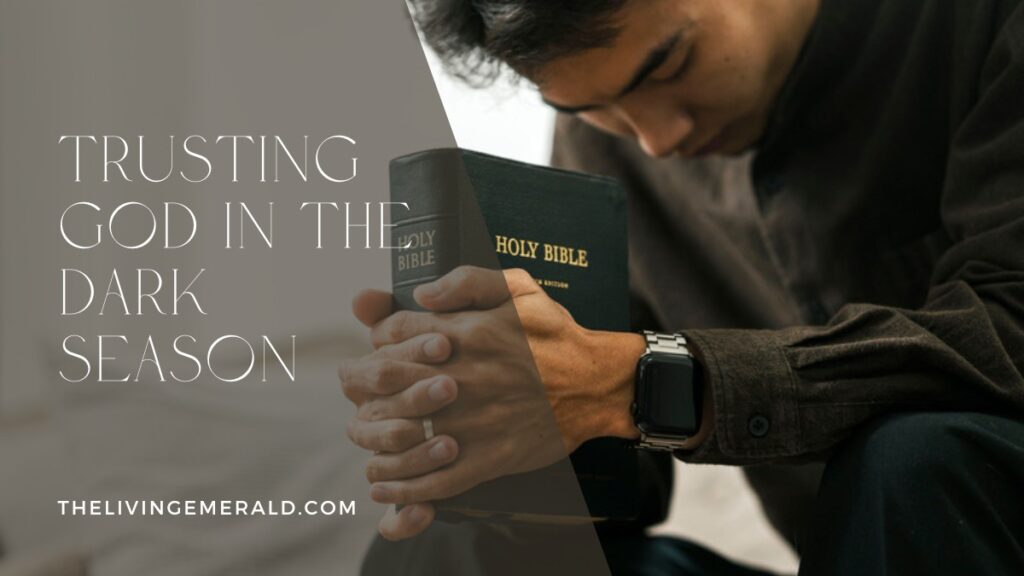

Does prayer change anything? That’s the question underneath a specific kind of disappointment that doesn’t get talked about enough: praying for something real, believing God for it, and watching the situation stay exactly the same — or get worse. Not once. Repeatedly.
If you’ve been there, or you’re there right now, this isn’t going to hand you a tidy explanation for why your specific prayer hasn’t been answered yet. Scripture doesn’t do that either. But it does say something honest about what’s actually happening in the waiting — and it’s worth looking at directly.
The Question Behind the Question
“Does prayer change anything?” is rarely really about prayer as a concept. It’s usually about one specific situation that hasn’t moved — a marriage, a diagnosis, a business, a child, a door that stays shut no matter how long you’ve stood in front of it. The theology question is a stand-in for the real one: why hasn’t this changed yet?
That distinction matters, because it’s the reason generic answers about prayer feel so hollow when you’re in the middle of a real, specific ache. You’re not asking for a definition of prayer. You’re asking whether you’ve been forgotten.
What Scripture Actually Says — And What It Doesn’t
What the text says: Paul asked God three times to remove a “thorn in the flesh” — a real, specific, physical affliction he named directly. God’s response wasn’t removal. It was “My grace is sufficient for you, for my power is made perfect in weakness” (2 Corinthians 12:7-9). The thorn stayed. Paul’s understanding of what he was asking for changed instead.
Separately, Jesus told a parable about a persistent widow who kept petitioning an unjust judge until he finally acted — not because he cared, but because she wore him down (Luke 18:1-8). Luke states plainly why Jesus told it: “to show them that they should always pray and not give up.”
Reasonable inference: These two passages, side by side, suggest prayer isn’t a transaction where the right request produces the requested outcome. Paul’s thorn stayed. The widow’s persistence eventually produced a result. Both were commended for continuing to bring the request honestly — not for guessing the “correct” way to pray it.
Interpretation and application: This doesn’t mean your situation is a “thorn” you’re meant to simply accept, and it doesn’t mean persistence guarantees the outcome you want either. It means the honest answer to “does prayer change anything” isn’t a flat yes or no — it’s that prayer is doing something even when the circumstance isn’t moving, and Scripture doesn’t pretend otherwise.
The Difference Between “Unanswered” and “Answered Differently”
A lot of what gets labeled “unanswered prayer” is actually a request that got a different answer than the one asked for — and that distinction is only visible in hindsight, which is exactly why it’s so hard to sit with in the moment.
This isn’t a claim that everything eventually makes sense, or that every hard situation resolves into a lesson. Some prayers genuinely go unanswered in the way we hoped, for reasons we won’t understand this side of eternity. What it does mean is that “nothing is changing” and “nothing is happening” are not the same statement, even when they feel identical from where you’re standing. Learning to hold that tension is its own kind of faith — one that doesn’t require pretending the wait doesn’t hurt.
Does Prayer Change Anything? What to Actually Do While You Wait
A few honest, practical postures for the waiting itself:
- Keep naming the actual request. Vague prayer produces vague clarity. Paul named his thorn specifically — say plainly what you’re asking for, even if the answer isn’t what you hoped.
- Keep acting on what’s in front of you. The widow didn’t wait passively — she kept showing up. Waiting on God rarely means doing nothing; it usually means continuing to do the next faithful thing.
- Separate silence from absence. A season without a clear answer is not evidence God has stopped listening. It’s evidence you’re in a season that hasn’t resolved yet.
- Let your definition of “answered” stay open. Sometimes the answer is strength to carry it, not removal of it. That’s not a consolation prize — it’s what Paul actually received, and he called it sufficient.
The Honest Takeaway
Prayer isn’t a vending machine, and it was never promised to be one. But it also isn’t nothing. Something is happening in the waiting — in you, in the situation, in whatever is being worked out that you can’t see yet. That’s a harder answer than “yes, it changes everything instantly,” but it’s the one Scripture actually gives.
So does prayer change anything even when the answer is slow? If you’re still praying for something that hasn’t moved, you’re in good company — Paul was too. If the waiting has also made it hard to even want to pray, that’s a different but related weight worth reading about too.
What’s one prayer you’ve been carrying for a long time without a clear answer? You don’t have to share the details — just naming that you’re still holding it can be its own kind of honesty.
Related Reading
If the waiting has made it hard to even want to pray, that’s worth reading about directly in When You Still Love God but Don’t Feel Like Praying. And if the disappointment you’re carrying isn’t about prayer specifically but about a plan that fell apart, What to Do When the Path You Built Suddenly Changes looks at that same kind of waiting from a different angle.