
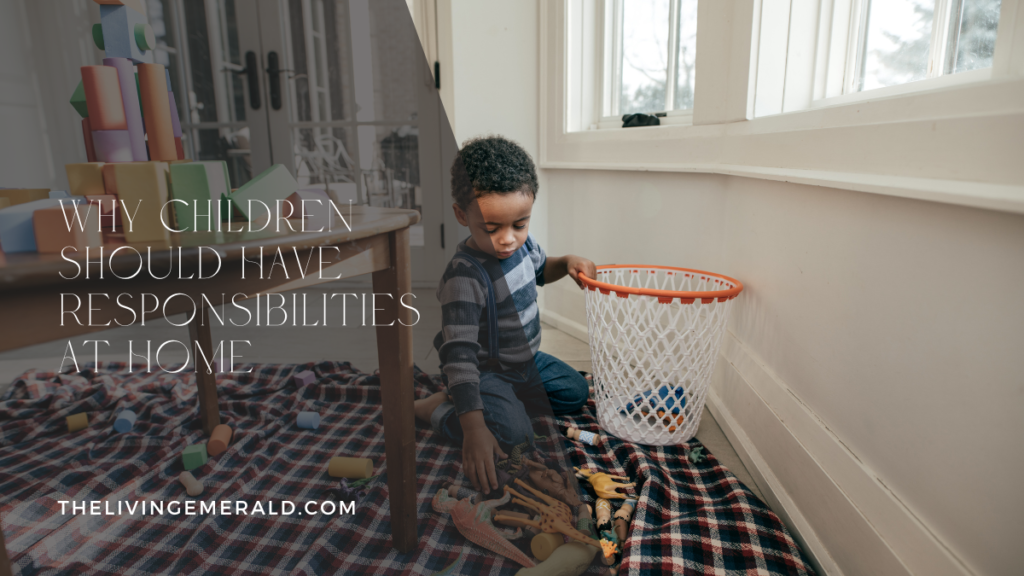
In many homes, chores are a battle. Parents nag, children stall, and a job that would take ten minutes takes an hour and ends in tears. Others avoid the fight entirely and simply do everything themselves, hoping the children will learn responsibility some other way. Yet children and chores belong together, because chores are not really about clean plates. They are training in contribution, competence and belonging to a family.
This article is general parenting guidance. It treats household tasks as part of character formation, not as unpaid punishment. Every child and home is different, so adapt these ideas to your child’s age, ability and circumstances, and keep tasks safe. The aim is a home where everyone has a part to play.
Why Children and Chores Matter
When children help at home, they learn that a family runs because people contribute, not because things happen by magic. They build practical skills, such as tidying, cooking and caring for belongings, that they will need for life. They also develop confidence: the feeling of “I can do this, and it makes a difference.”
Chores also teach that belonging comes with participation. Children who are asked to help feel trusted. They are members of the household, not guests, and that sense of membership supports their sense of security.
Chores Are Not a Punishment or a Test of Worth
It helps to be careful about how chores are framed. If tasks are used only as punishment, children learn to see them as something unpleasant to avoid. If a child’s worth seems tied to how well they do them, they may become anxious. Present them instead as ordinary parts of family life, “this is what we do in our home,” and stay calm when the results are imperfect.
Notice effort more than outcome. A crookedly folded towel is still a folded towel, and a child who is thanked for trying is more likely to try again.
Age-Appropriate Ideas for Children and Chores
Choose tasks that match what your child can safely and reasonably do. As a rough guide, and always with supervision where needed:
- Young children (about 2 to 4): putting toys in a basket, placing dirty clothes in a bin, helping wipe a low table.
- Early school age (about 5 to 7): making the bed with help, setting the table, feeding a pet, watering plants.
- Middle childhood (about 8 to 11): sweeping, folding laundry, washing plastic dishes, helping prepare simple food with supervision.
- Older children and teens: cooking simple meals, cleaning bathrooms, caring for younger siblings, helping with shopping and planning.
These are examples, not a schedule. Some children are ready sooner and some later, and safety always comes first. Guidance on children’s development from organisations like HealthyChildren.org can help you judge what suits each age.
How to Teach a Chore, Step by Step
A child cannot do what they have never been shown. Try a simple sequence: do it together first, then let them do it while you watch, then step back and let them do it alone, checking in kindly. Explain what a finished job looks like in plain terms, such as “the floor has no toys on it,” and be patient with the learning curve.
Resist the urge to take over the moment it becomes slow. Redoing a task in front of a child sends the message that their effort was not good enough. If something needs fixing, do it later, or work on it together.
Keep Chores Consistent and Predictable
Routines make chores easier. A regular time, such as tidying before dinner or a short weekend job, becomes a habit and reduces arguments. A simple chart can help younger children see what is expected. Keep the list short, and be clear about what happens if a task is not done, using calm, predictable consequences and not threats.
Try to avoid paying for basic family tasks. Household contribution is part of belonging, and turning every job into a payment can teach that helping only happens for a reward. Some families keep extra jobs for earning, and that can work if the basics stay unpaid.
When Children Resist
Resistance is normal. Stay calm, restate the expectation and follow through kindly. Ask whether the task is too hard, the timing is wrong or the child is tired. Sometimes a small change, such as a timer, a shared task or some music, is enough. Our article on teaching children responsibility offers more ideas for building responsibility step by step.
Common Mistakes With Children and Chores
A few patterns tend to undermine chores. One is inconsistency: insisting one day and ignoring the next teaches children that the rules are optional. Another is expecting adult standards from a child, which leads to frustration on both sides. A third is criticising the result, so children learn that helping brings complaints, not thanks. A fourth is doing everything yourself out of convenience, which quietly tells children they are not needed.
Watch for these in your own home without guilt. Most parents fall into at least one. Correcting them is usually simple: be consistent, lower the bar, say thank you and let children carry real responsibility. Over time, children and chores become less of a battle and more of a shared routine, and you will find that children rise to the trust you show them.
Build a Home Where Everyone Contributes
Start small this week. Choose one simple task for each child, show them how, and thank them for their effort. Over time, children and chores can become part of the rhythm of family life, and children grow up capable, confident and used to contributing. If you worry about pushing too fast, don’t rush childhood is a good reminder to let each stage unfold at its own pace.
Give it a few weeks. Children and chores need time to settle into a routine, and the patience you invest now will pay off for years.