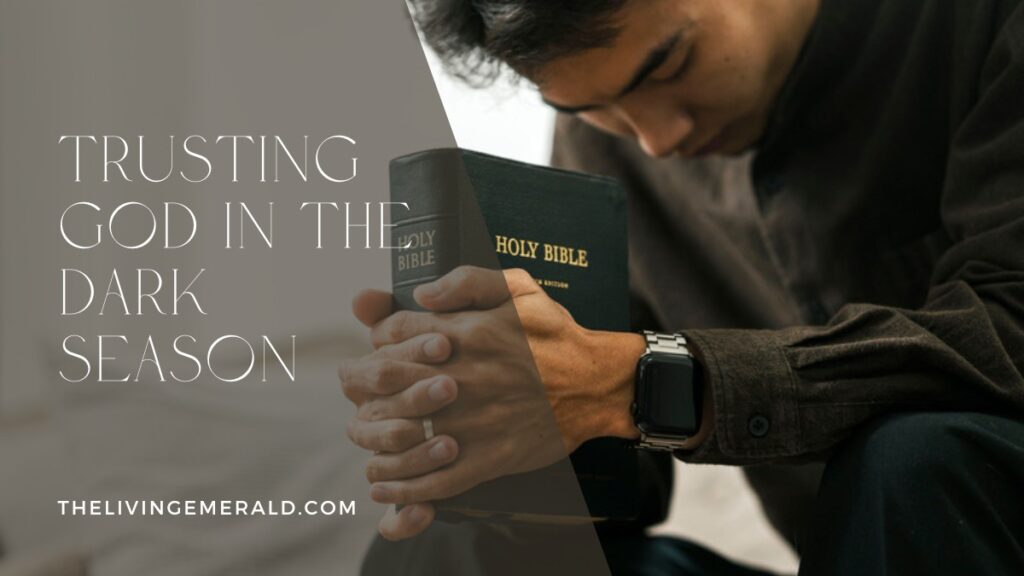

Few sentences in the Gospels are quoted as often, or needed as much, as this one: “Come to me, all you who are weary and burdened, and I will give you rest.” Tired parents, overworked employees, discouraged believers and people who simply cannot carry one more thing all hear something in it. Jesus and the burdened meet in Matthew 11:28, and it is worth slowing down to ask what he actually meant.
Verses like this are easy to turn into slogans. Our aim is to read it in its setting, to separate what the text says from what we infer and how we apply it, and to avoid treating it as a formula that removes every hardship. Read carefully, it offers something better than a slogan: a person to come to.
The Words Themselves
Here is the passage in full: “Come to me, all you who are weary and burdened, and I will give you rest. Take my yoke upon you and learn from me, for I am gentle and humble in heart, and you will find rest for your souls. For my yoke is easy and my burden is light” (Matthew 11:28-30). Notice that it is an invitation and not a command to work harder. It is addressed to the weary, and the offer is rest.
Notice, too, that the invitation is to a person. Jesus does not say, “Follow these seven steps,” or “Try harder.” He says, “Come to me.” Whatever else rest means here, it begins with a relationship.
Jesus and the Burdened in Their Original Setting
The invitation comes at a particular moment. In the verses just before it, Jesus has spoken about towns that saw his miracles and still would not repent (Matthew 11:20-24), and he has thanked the Father for revealing truth to those who are humble like little children (11:25-27). Immediately afterwards, in Matthew 12, he is in disputes with religious leaders about how the Sabbath should be kept.
That context matters. Elsewhere Jesus criticises leaders who “tie up heavy, cumbersome loads and put them on other people’s shoulders” (Matthew 23:4). Many scholars therefore see the weary and burdened as, at least in part, people crushed by religious demands that no one could carry. So Jesus and the burdened are meeting on the very ground of exhausting religion as well as ordinary human strain.
What the Yoke Means
A yoke was a wooden frame that joined animals for work. In Jewish teaching the word was also used for a teacher’s interpretation of God’s law, which a student took on. When Jesus says, “Take my yoke upon you,” he is inviting people to learn from him and walk under his teaching. It is not a promise of no responsibility. It is a promise that his way is not crushing.
Some scholars note that the word translated “easy” can carry the sense of kind or well-fitting. That is a helpful picture, though we should hold it lightly. What the text plainly says is that his burden is light and that he is gentle and humble. The yoke is real, but the one you are yoked to can be trusted.
What Kind of Rest Is Promised?
It is important to be honest about what the text does not promise. Jesus does not say that responsibilities vanish or that life becomes easy. He promises rest for your souls. That is deeper than a day off, though it does not despise the body’s need for sleep and stillness, which Scripture affirms elsewhere. It is the rest of knowing you are not carrying everything alone, and that you do not have to earn acceptance.
For many people, this is the difference between being tired and being crushed. You may still have a long to-do list. What changes is the weight of fear, guilt and the need to prove yourself that comes with it.
How to Come When You Are Weary
Coming to Jesus is not complicated, though it can be hard when you are tired. Some practical ways to respond:
- Be honest in prayer. Tell him you are tired, and say what is heavy. He already knows.
- Stop performing. Notice where you are working to earn approval, and put that down.
- Sort what is yours to carry. Not every burden was given to you. Our article on when you are tired of serving can help.
- Practise real rest. Sleep, Sabbath-like pauses and quiet are gifts, not laziness.
- Learn from him. Read the Gospels slowly and notice how he handles pressure, people and time.
When Coming to Jesus Still Feels Empty
There are seasons when prayer feels dry and the invitation feels distant. That does not cancel the promise. It may simply mean you are exhausted, and that you need practical help as well as spiritual comfort: rest, a conversation with a trusted person, or professional support if your weariness is deep. Bringing your struggle into the open is not a lack of faith. If prayer itself feels hollow, our piece on when you still love God but do not feel like praying speaks directly to that.
What Rest Looks Like in Everyday Life
Rest is not only spiritual language. When Jesus and the burdened meet, the result should show up in ordinary days: a more peaceful conversation with your family, a decision made without panic, a Sabbath-like pause that you actually protect. Jesus himself slept in a boat during a storm (Mark 4:38) and withdrew to quiet places to pray, which suggests that rest and prayer were part of a faithful life, not a distraction from it.
If you feel the invitation is for everyone but you, remember who it was addressed to: the weary and burdened, not the strong. You are not disqualified by tiredness. Tiredness is exactly what qualifies you to hear it.
Take the Invitation Seriously
Jesus and the burdened are still meeting, in kitchens, offices, hospital corridors and quiet bedrooms. The invitation stands: come, learn, and find rest. Take five minutes today to say, in your own words, “I am weary, and I am coming to you.” Then take the next small step in his gentle company.
If you take one thing from this passage, let it be the invitation itself. Jesus and the burdened have been meeting for two thousand years, and he has not stopped inviting. Bring him the weight you have been carrying alone.