
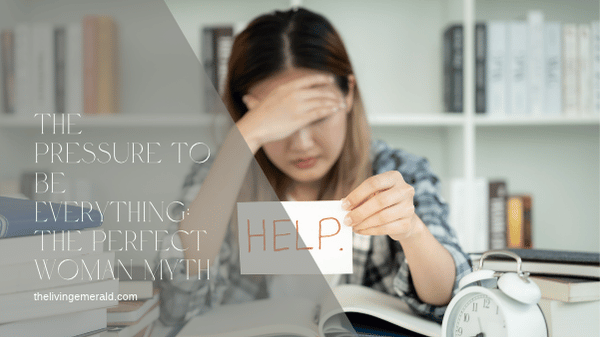
Somewhere along the way, many of us absorbed an impossible checklist: be endlessly patient, always put-together, a devoted mother, a supportive wife, spiritually strong, physically fit, financially wise, and never visibly tired while doing all of it. The perfect woman myth doesn’t come from any one place — it comes from everywhere at once, and it quietly sets a standard no human being could actually meet.
1. The Myth Promises Peace It Never Delivers
The quiet belief driving this pressure is that if you can just be everything well enough, you’ll finally feel secure, approved of, enough. But the standard keeps moving. There is no finish line where “perfect” is achieved and the pressure stops — which means chasing it only produces more exhaustion, never the peace it promised.
2. It Was Never a Biblical Standard
The Proverbs 31 woman, often misused as a checklist, was actually a poem celebrating a woman’s strength, wisdom, and varied gifts — not a daily to-do list meant to be fully completed by any one woman every single day. Scripture celebrates faithfulness, not flawlessness.
3. Your Children Don’t Need a Perfect Mother
Children need a present, loving, honest mother far more than they need a flawless one. In fact, watching you handle mistakes, apologize, and keep going teaches them something a flawless performance never could: that it’s safe to be imperfect and still be loved.
4. Comparison Fuels the Myth More Than Reality Does
Much of the pressure to be everything comes from comparing your full, messy, behind-the-scenes life to other women’s curated front stage — whether on social media or simply in church hallway small talk. Nobody is actually living the flawless version you’re comparing yourself to.
5. Letting Go Isn’t Giving Up — It’s Getting Honest
Releasing the perfect woman myth doesn’t mean lowering your standards for what matters. It means directing your energy toward what’s actually true and important, instead of an exhausting performance for an audience that was never really watching as closely as you feared.
This Pressure Shows Up Differently for Different Women
For some women, the perfect woman myth shows up as pressure to be endlessly patient; for others, it’s pressure around appearance, career achievement, or hospitality. Naming your specific version of the pressure — the exact standard you feel you’re failing to meet — makes it much easier to challenge than a vague, general sense of inadequacy.
Replace the Myth With a Truer Standard
Instead of chasing an impossible standard of flawlessness, consider adopting a truer one: faithfulness in the midst of your actual, imperfect life. According to Psychology Today, perfectionism is consistently linked to higher anxiety and lower life satisfaction, while self-compassion — accepting your real, imperfect effort — is linked to greater resilience and wellbeing.
What to Say to Yourself in the Moment
When the old pressure resurfaces — after a mistake, a messy house, a short-tempered moment — try replacing the automatic self-criticism with something truer: “This is a hard moment, not proof I’m failing.” Small shifts in internal language, repeated consistently, slowly retrain the harsh inner voice the myth has trained into many of us.
You’re Allowed to Let Some Things Go Undone
Part of releasing the perfect woman myth is accepting that some things genuinely will go undone, imperfectly, or late — and that’s not failure, it’s simply the reality of being one finite person carrying many real responsibilities with honesty instead of performance.
Grace Covers the Gap Between Who You Are and the Myth
Whatever ground you feel you’re falling short on, grace — God’s and your own toward yourself — covers that gap completely. You were never meant to close it by becoming flawless.
Letting Go of the Perfect Woman Myth for Good
Every time you catch yourself chasing the perfect woman myth, pause and remember: the perfect woman myth was never a standard you were meant to meet. Release it again, as many times as it takes.
If this pressure feels familiar, you may also connect with rebuilding your confidence after a hard season or finding yourself again when motherhood swallows your identity.