
Life stops going to plan for everyone eventually. Life stops going to plan quietly, usually — a client goes silent, a platform changes, a season simply ends without warning.
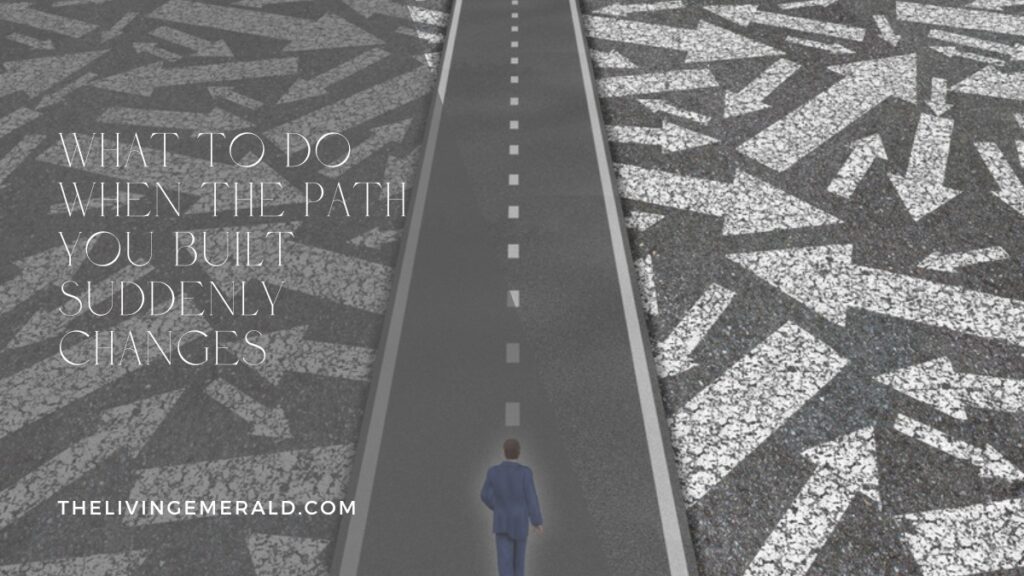
When life stops going to plan, it rarely announces itself with warning. A steady client stops calling. A platform changes its rules overnight and the reach you built on it quietly disappears. A month you expected to look like every other month instead looks nothing like it. The path you had built, the one that felt solid, suddenly does not hold the same weight it used to.
I have run a small graphic-design and digital-printing business for years, largely on my own, and I have felt this exact kind of ground-shift more than once — a dependable client goes quiet, a platform restricts something that used to bring in work, income that felt predictable stops being predictable. None of it arrives with a clear explanation. It just arrives.
The First Instinct Is Usually the Wrong One — Life Stops Going To Plan
When the path changes suddenly, the first instinct is often to panic-fix everything at once — chase every possible new client, try every platform, say yes to anything that might replace what was lost. It feels productive. Mostly, it just spreads limited energy across too many directions and delays the one thing that actually helps: an honest assessment of what changed and why.
Separate What You Can Influence From What You Cannot
A platform’s policy change is not something you can reverse. A client’s changed priorities are not something you can argue back into place. Spending energy fighting decisions that were never yours to make is energy that is not going toward the decisions that are actually yours — how you respond, what you build next, and where you place your effort now.
This distinction sounds obvious stated plainly, but under real pressure it is easy to lose. The practical move is to write down, honestly, what part of the situation is outside your control and let that part go, even if letting go does not feel satisfying.
Diversify Before You Need To, Not After
One of the clearest lessons from working largely alone in a small business is that depending heavily on one client, one platform, or one income stream is comfortable right up until it stops working — and then it is very uncomfortable all at once. Research on small and midsize business resilience points to the same pattern: businesses that survive sudden disruption well are usually the ones that had already spread their income and operations across more than one source before the disruption arrived.
If you are reading this after the disruption has already happened, the lesson still applies going forward — rebuild toward more than one source of income or client relationship this time, even if it takes longer to establish.
Rebuild the Foundation, Not Just the Income
It is tempting to treat the goal as simply replacing the lost income as fast as possible. A steadier goal is rebuilding the underlying structure that made the business work in the first place — your actual skill, your reputation, your systems for finding and keeping clients — so that whatever replaces the lost income sits on a stronger foundation than before, not just a faster patch.
What This Looks Like in Practice
Name the loss specifically. Not “things are hard,” but the exact client, platform or income stream that changed, and what it actually cost you. Vague problems produce vague responses; specific problems produce specific decisions.
Pick one new direction, not five. Under pressure, trying everything at once usually means finishing nothing well. Choose the one most realistic next step and give it genuine effort before adding another.
Build the habit of reviewing dependency regularly. Once a quarter, honestly ask what percentage of your income or attention sits in one place, and whether that concentration is still acceptable.
A Practical Next Step
Take fifteen minutes today to write down exactly what changed, what part of it you can influence, and one specific action you can take this week that moves you toward a steadier foundation — not a full recovery plan, just one honest step.
If the uncertainty itself feels heavier than the practical problem, that fear is worth addressing directly rather than pushing past silently, and if it helps to remember that purpose was never only tied to one path, your gifts and talents remain yours regardless of which client or platform changes around you.
The path you built was never the only path available to you. It was simply the one you were on. What matters now is which honest step you take next.
When life stops going to plan, it is not the end of your story — it is an invitation to write the next chapter with open hands. Life stops going to plan more often than we admit, and each time, growth is possible.