
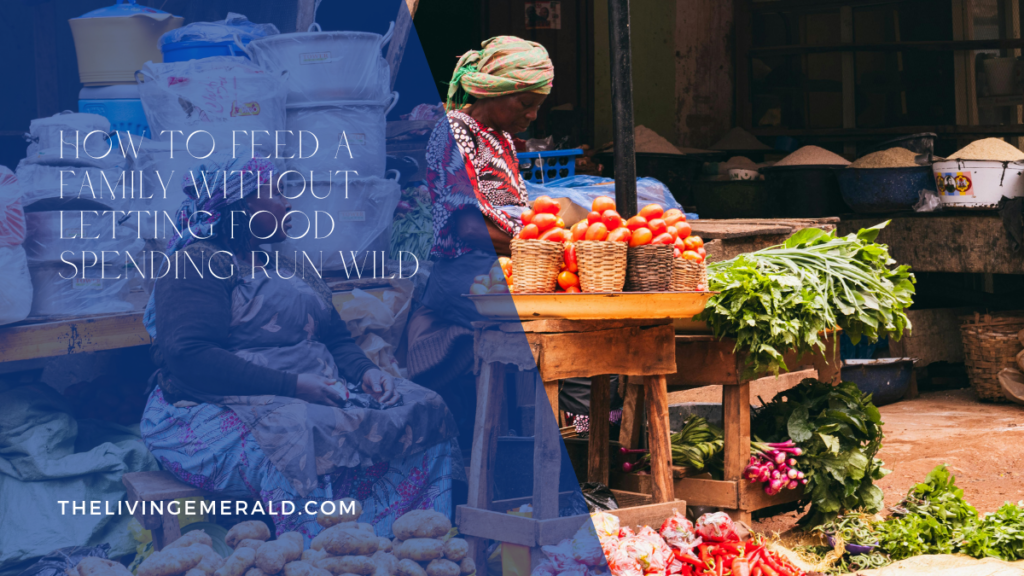
The Nigerian family food budget rarely breaks in one dramatic moment. It breaks slowly — a bag of rice that costs more than it did last month, a “just this once” order-in on a tired evening, a market trip that somehow always costs more than the mental number you had going in.
Work schedules make this harder to manage well. When the day is already full of client deadlines and school runs, food planning is usually the first thing to get skipped — and skipped planning is expensive planning, even when it doesn’t feel like it in the moment.
Why the Nigerian Family Food Budget Feels Impossible to Predict
Prices shift often enough that last month’s grocery total isn’t a reliable guide for this month. Add a household with different tastes, a child going through a picky phase, and the temptation to buy convenience food on a busy week, and the budget stops being a plan and starts being a guess that usually loses.
A Saturday That Actually Changed How I Think About Food
One Saturday, instead of the usual rushed shopping, the children and I bought fresh groundnut at the market and spent the whole afternoon preparing it together from start to finish — sorting, roasting, the whole process, no shortcuts. It cost less than a bag of the processed version would have, and it turned into one of those ordinary afternoons that ends up mattering more than it looked like it would.
What stuck with me wasn’t just the savings. It was that a slower, more involved way of feeding the family — one that used to feel like an inconvenience — actually became the more memorable and more affordable option, once we stopped treating “fast” as automatically “better.”
Practical Ways to Keep the Nigerian Family Food Budget Honest
Planning meals for the week before shopping — even roughly — cuts down on the impulse buys that quietly inflate a grocery trip. Buying staples like rice, beans, and garri in bulk when the price is reasonable, rather than restocking small quantities under pressure, tends to average out cheaper over a few months. And involving the children in some part of food preparation, the way that Saturday with the groundnut did, makes home-cooked meals feel like an activity instead of a chore competing with takeout.
Balancing Cost With Actual Nutrition
Cheaper doesn’t have to mean less nourishing. Beans, groundnut, seasonal vegetables and locally available proteins are often both the most affordable and the most nutritionally solid options on a Nigerian table — it’s convenience food, not traditional food, that tends to cost more while offering less. The World Health Organization confirms that a balanced, minimally processed diet built around foods like these remains one of the most reliable ways to protect a family’s long-term health.
When the Nigerian Family Food Budget Runs Tighter Than Usual
Some months the budget simply won’t stretch the way it did the month before, and no amount of planning changes that. On those months, leaning harder on the cheapest reliable staples — beans, garri, seasonal vegetables, whatever grain is currently priced fairly — does more good than trying to maintain the usual variety on a shrinking amount of money.
Simplifying meals for a tight month isn’t a failure of planning. It’s what planning is actually for — adjusting on purpose, before the money runs out mid-month and forces a worse decision later.
A Realistic Place to Start
Pick one weekend this month for a slower, hands-on meal with the family instead of the usual rushed shopping-and-cooking routine. The Nigerian family food budget doesn’t need a complete overhaul to improve — it needs a few deliberate weekends like that Saturday with the groundnut, repeated often enough to become the new normal.
Related Reading
This builds on Healthy Eating When Money and Time Are Tight. And for the broader habit-rebuilding angle, see Why Turning 40 Can Be a Reason to Rebuild Your Daily Habits.